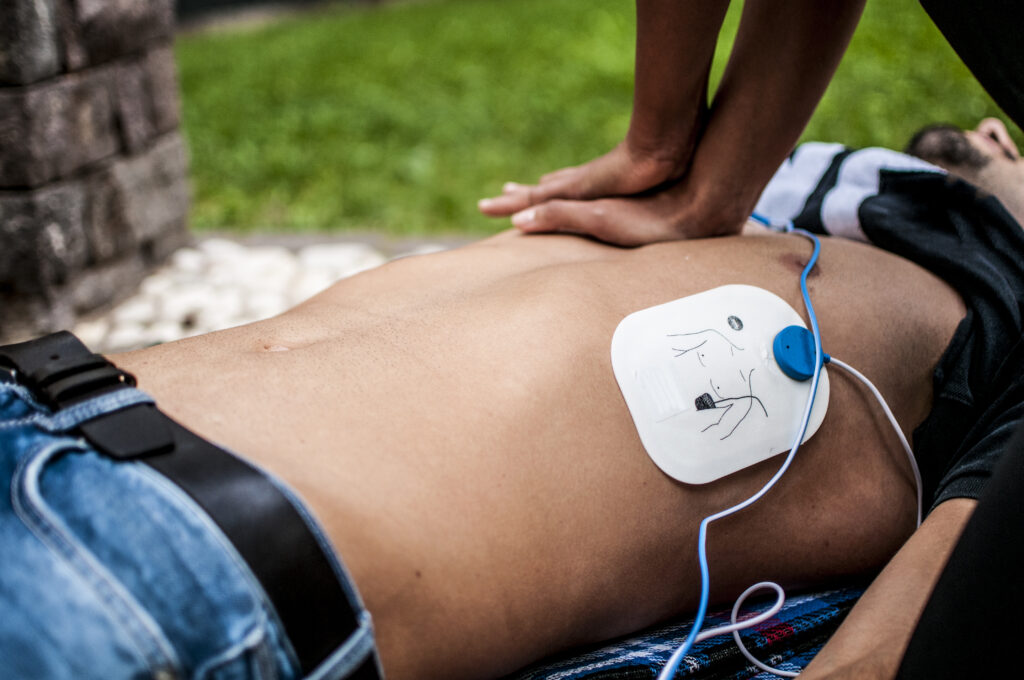
When cardiac arrest strikes, combining CPR with an Automated External Defibrillator (AED) delivers the most powerful response possible. While chest compressions keep oxygen-rich blood flowing to vital organs, the AED works to correct dangerous heart rhythms. Together, these interventions transform survival odds from slim to significant.
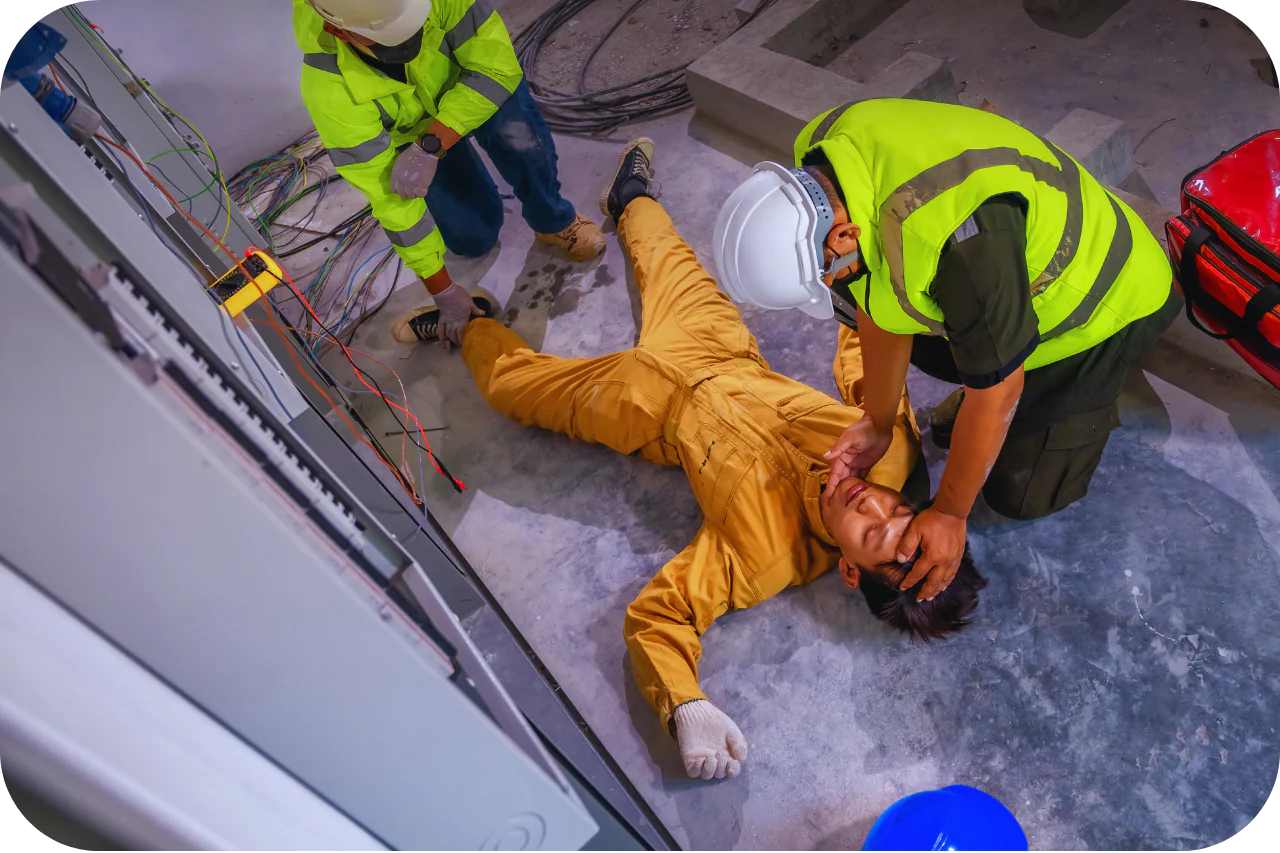
Imagine you’re at your workplace when a colleague suddenly drops to the floor. You recognise cardiac arrest immediately. An AED hangs on the nearby wall, and you remember your CPR training. But uncertainty creeps in: Should you grab the AED first? Can you use both? What’s the correct sequence?
This uncertainty costs precious seconds during the critical window when immediate action makes the difference between recovery and tragedy. This comprehensive guide provides clear protocols for integrating AED use with CPR in Australia, equipping you with the knowledge to respond decisively during cardiac emergencies.
Want to build life-saving competence? First Aid Pro delivers nationally recognised CPR and AED integration training throughout Australia, blending practical hands-on experience with expert guidance to prepare you for real emergencies.
Key Takeaways: CPR and AED Integration
- CPR and AED integration works as a partnership in cardiac arrest response—compressions sustain circulation while defibrillation corrects rhythm abnormalities
- Starting CPR before AED application preserves blood flow to critical organs and enhances defibrillation success
- Australian WHS legislation requires workplace risk assessment to determine first aid provisions; AEDs are recommended for higher-risk environments and locations where ambulance arrival times exceed typical response standards
- Australia’s public defibrillator network continues expanding, with devices available in airports, shopping complexes, sports venues, and community spaces
- Quality first aid training builds the confidence needed for effective emergency action
- Children aged 1–8 years benefit from paediatric pads and reduced shock energy when available, but adult pads can be substituted if necessary; standard adult protocols apply for children over 8 years
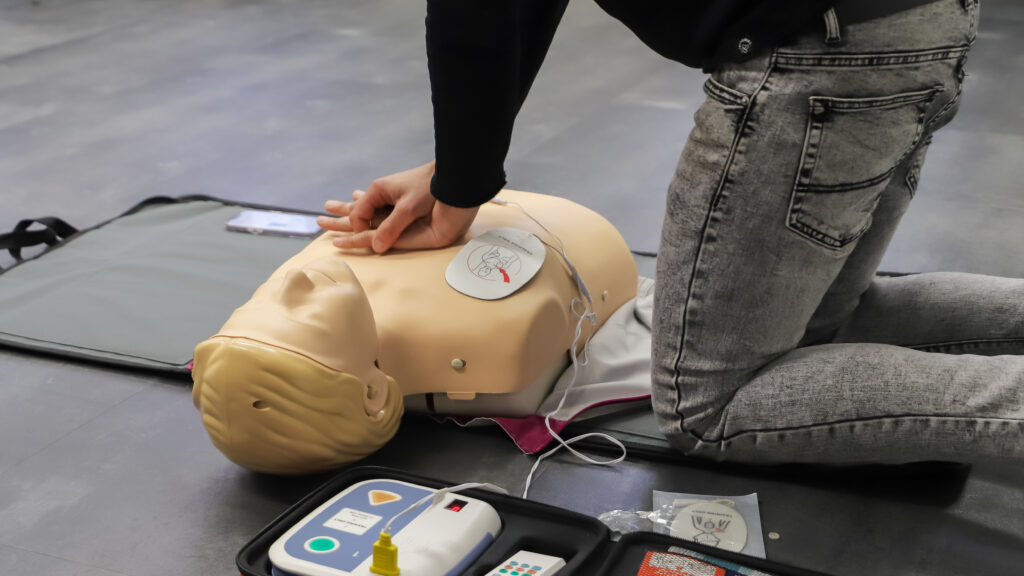
The Critical Partnership: Why CPR and AED Integration Matters
Out-of-hospital cardiac arrest survival rates in Australia hover around 10%. Yet when bystanders deliver CPR and apply an AED within 3–5 minutes, survival rates can surge to 60–70%. These figures represent real Australians whose lives depend on immediate, integrated intervention.
The Life-Preserving Role of Early CPR
Brain cells begin dying within 4-6 minutes once the heart stops delivering oxygenated blood. CPR cannot restart the heart, but it manually circulates blood throughout the body, maintaining oxygen delivery to the brain and other essential organs. Quality chest compressions generate enough blood flow to protect brain tissue and keep the heart responsive to subsequent defibrillation attempts.
The Australian Resuscitation Council’s survival chain emphasises this sequence: prompt recognition and emergency call, immediate CPR, rapid defibrillation, and swift advanced medical care. For sudden cardiac arrest, CPR precedes defibrillation as a complementary intervention—not a replacement—ensuring the patient’s body remains viable for the shock that may restore normal heart rhythm.
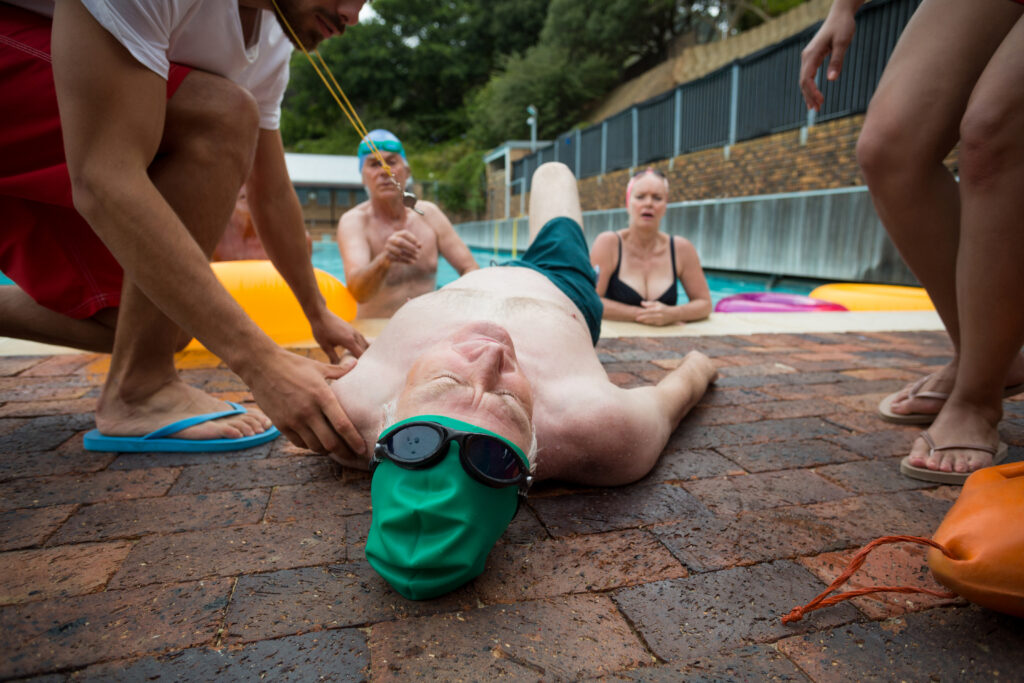
Making the Right Choice: Understanding When Each Intervention Applies
The question isn’t whether to choose CPR or an AED—you’ll use both in proper sequence. For any unresponsive person who isn’t breathing normally, begin CPR without delay. Never postpone compressions while waiting for AED retrieval. Start immediately and maintain compressions until the device becomes available.
Apply the AED the moment it arrives, keeping CPR interruptions under 10 seconds. You’re not switching from CPR to AED use—you’re incorporating the AED into your ongoing CPR efforts. The device provides clear instructions about when to pause for rhythm assessment and when to restart compressions.
Table 1: Response Protocol for CPR and AED Integration
Scenario | Required Action | Clinical Rationale |
Collapse with absent breathing | Begin CPR without hesitation | Brain injury starts within 4-6 minutes |
Solo responder providing CPR | Maintain CPR, call for assistance and AED | Compressions preserve viability |
AED becomes available | Brief pause for pad attachment, continue CPR | Reduce blood flow interruption |
AED indicates shock needed | Clear the area, deliver shock, restart CPR | Electrical therapy attempts rhythm restoration |
AED indicates no shock needed | Maintain CPR | Only specific rhythms respond to defibrillation |
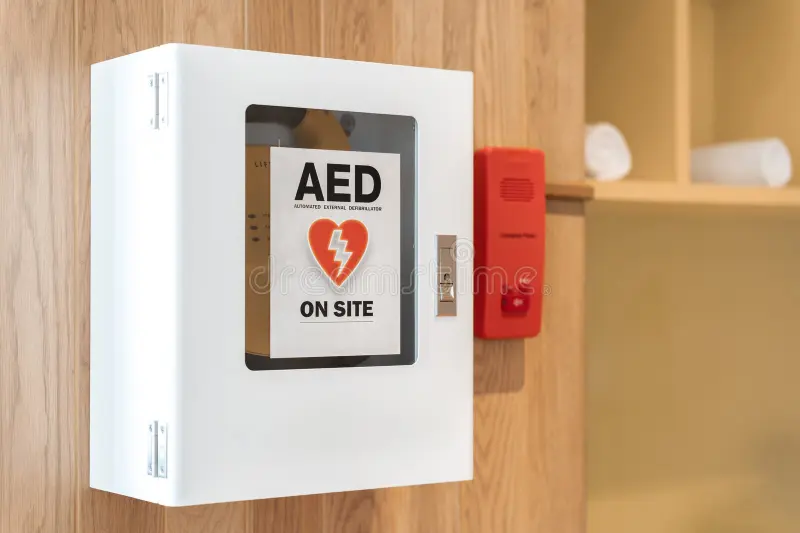
Locating AEDs Throughout Australia: Accessing Public Defibrillators
Finding Nearby Public Defibrillators
Multiple resources help Australians identify accessible AEDs, including the Register My AED database, GoodSAM mobile application, and state emergency service platforms like Emergency+. Triple Zero (000) operators can also guide you to the closest registered device during your emergency call.
Typical AED placements include shopping complexes, transport terminals, recreational facilities, educational institutions, public service buildings, corporate offices, hospitality venues, and community centres.
The limitation? Countless AEDs remain unlisted in public registries. Registering your workplace or organisation’s AED with national databases could prove lifesaving for someone in your community.
AED Provisions for Australian Workplaces
While Work Health and Safety regulations don’t universally require AEDs across all Australian workplaces, they do mandate appropriate first aid resources based on comprehensive risk evaluation. Environments where AEDs are strongly advised include gyms and fitness centres, mining and construction operations, electrical service providers, residential care facilities, and isolated work locations where emergency medical services require more than 10 minutes to arrive.
able 2: Workplace AED Risk Assessment Guidelines
Assessment Factor | Lower Risk Profile | Higher Risk Profile |
Workforce size | Under 25 employees | Over 100 employees |
Employee age range | Predominantly under 40 | Substantial over-50 workforce |
Work intensity | Office-based activities | Strenuous physical labour |
Emergency response time | Under 5 minutes | Over 10 minutes |
AED Recommendation | Consider provision | Strongly advised |
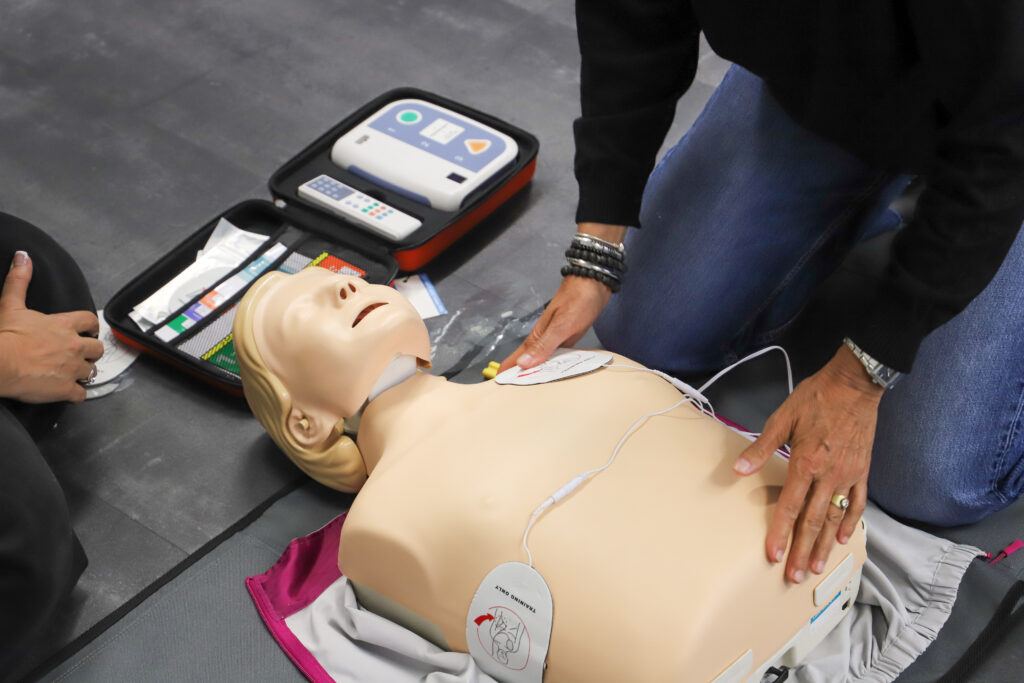
Australian AED Protocols: Complete Integration Steps
CPR and AED Integration Sequence
Step 1: Safety Assessment and Emergency Activation
- Verify scene safety before approaching
- Assess the person's responsiveness
- Call loudly for assistance and request someone call Triple Zero (000)
- Designate a specific person to retrieve an AED
Step 2: Initiate CPR Without Delay
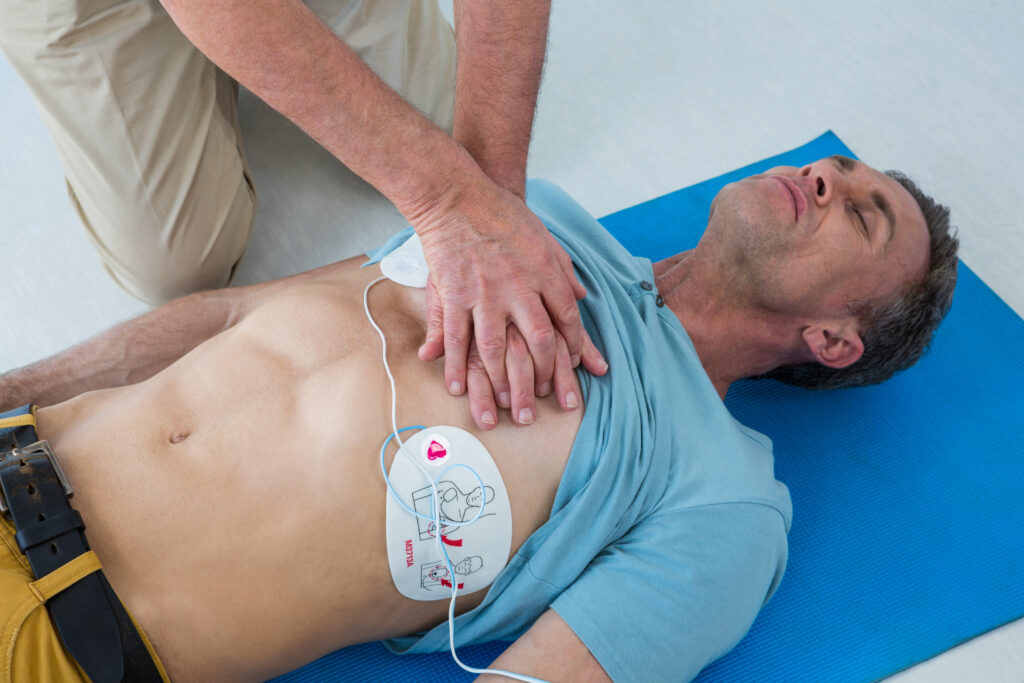
- Position one hand's heel at the chest centre, place the second hand on top
- Deliver firm, rapid compressions: minimum 5cm depth, 100–120 compressions each minute
- Provide 30 compressions followed by 2 rescue breaths
Step 3: Implement AED Upon Arrival
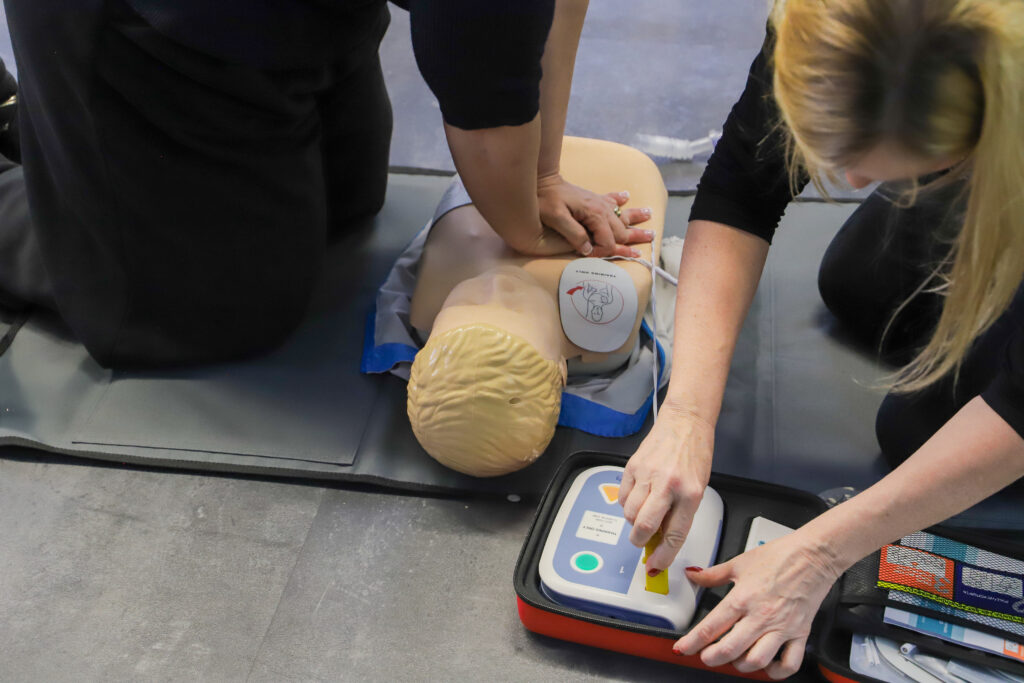
- Activate the AED and listen to voice guidance
- Ensure chest is bare and dry
- Position pads on exposed chest following diagram instructions
- Verify complete pad-to-skin contact
Step 4: Respond to AED Instructions
- "Analysing rhythm" → Cease CPR, maintain distance
- "Shock advised" → Confirm area is clear, activate shock button
- "Shock delivered" → Resume CPR without delay
Step 5: Maintain the Response Cycle
- Continue CPR for approximately 2 minutes
- Allow AED to conduct another rhythm assessment
- Repeat sequence until paramedics assume care or normal breathing returns
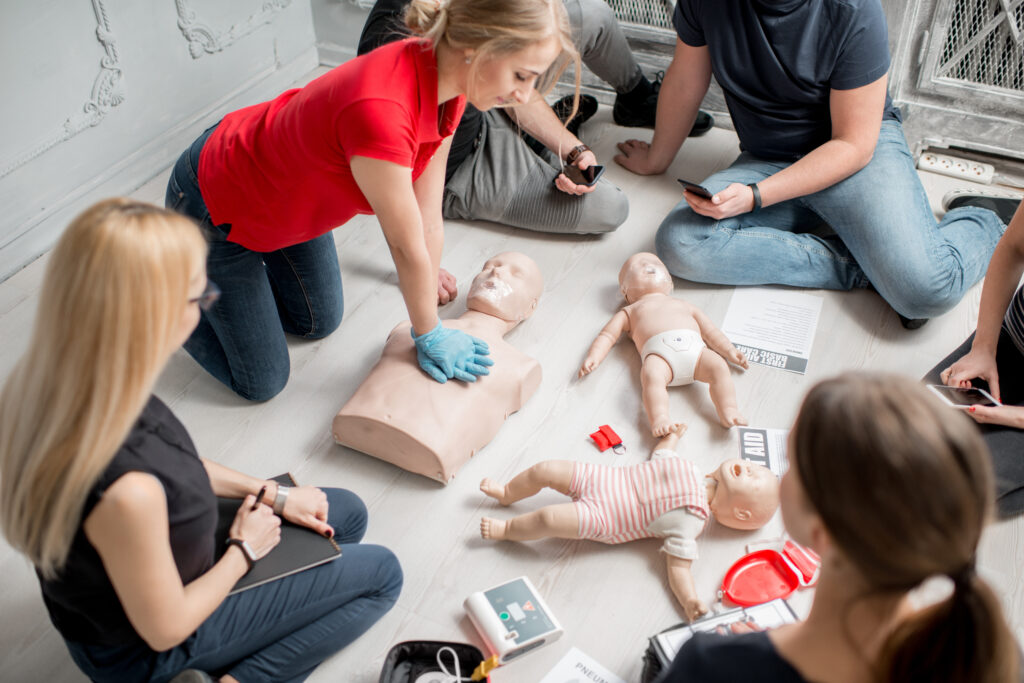
Special Protocols for Children: Paediatric AED Application
For children aged 1-8 years, paediatric pads are preferred when available. Adult pads serve as acceptable alternatives when paediatric options aren’t accessible.
For infants (under 1 year): Paediatric pads/AED are optimal; if only adult equipment is available, use it—typically positioning pads anterior-posterior to prevent overlap—delivering some shock is superior to none.
Paediatric adaptations include using one or two hands for compressions based on child size, compressing approximately one-third of chest depth, and for infants, employing two fingers for 4cm-depth compressions.
Training for CPR and AED Integration: Developing Competence and Assurance
Comprehensive Training Programme Components
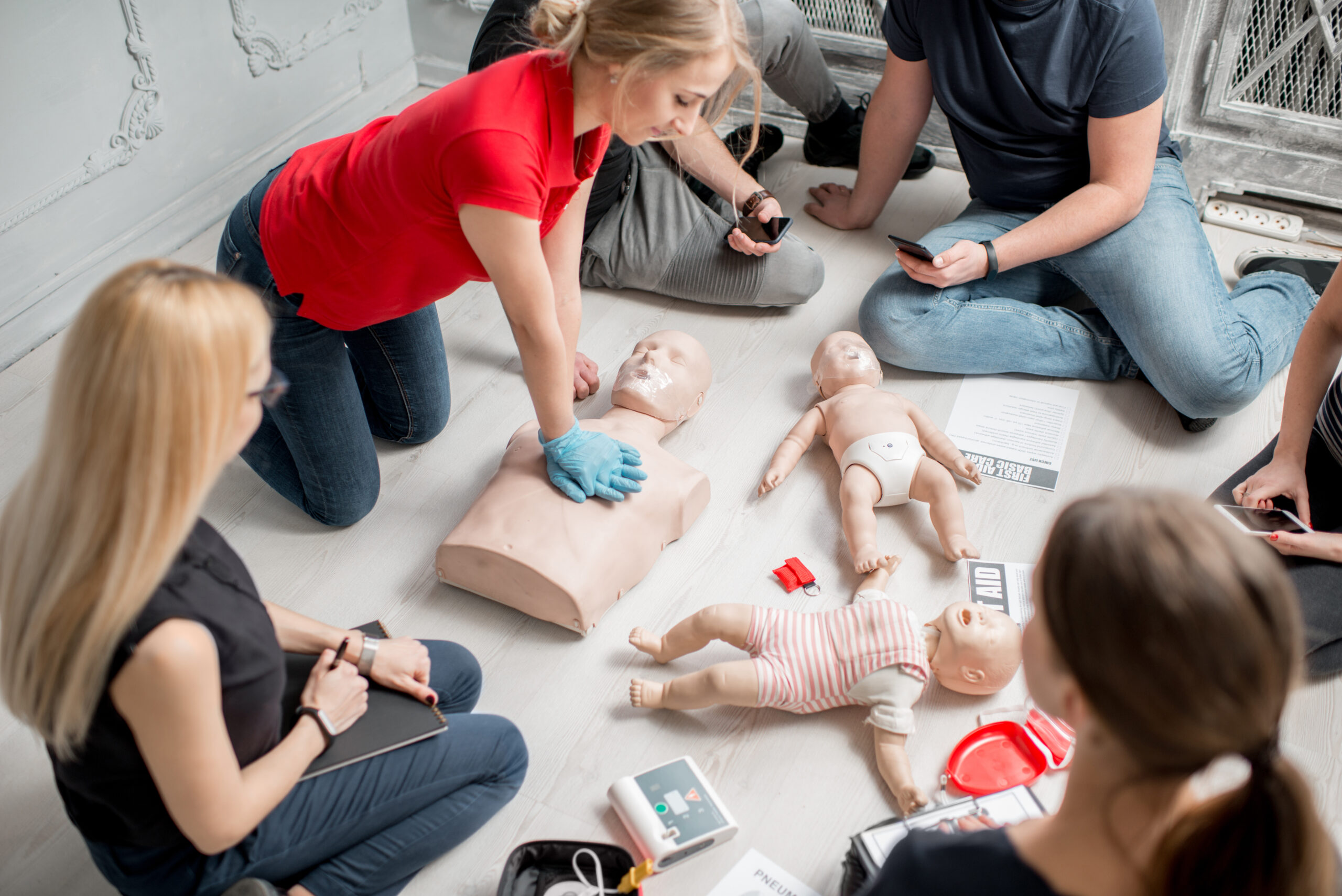
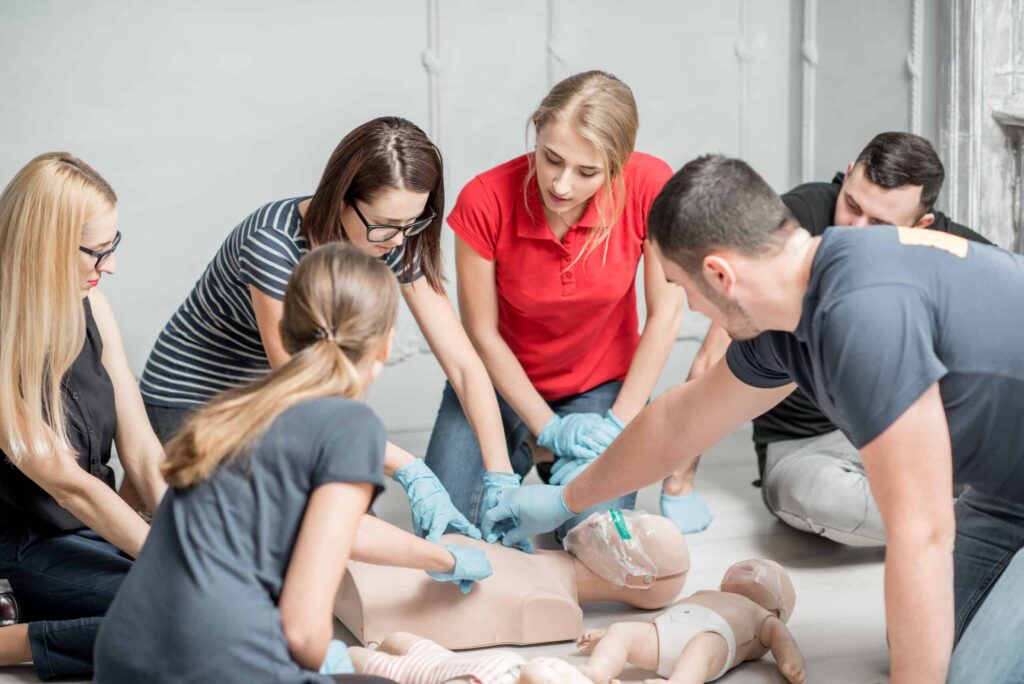
Nationally accredited courses provide hands-on skills development including proper chest compression technique using training manikins, rescue breathing delivery methods, AED pad placement practice, and realistic emergency simulations. Competency verification includes both practical performance and theoretical knowledge assessment.
Ready to develop these critical abilities? First Aid Pro’s comprehensive CPR with AED courses unite expert instruction with authentic practice scenarios. Our nationally recognised training delivers the assurance to respond capably in any emergency situation. Register with First Aid Pro today and acquire skills that could save someone’s life.
Locating Recognised Training Providers in Australia
Seek courses offered by Registered Training Organisations (RTOs) providing nationally recognised certifications:
- HLTAID009 Provide cardiopulmonary resuscitation (2-3 hours, yearly renewal advised)
- HLTAID011 Provide First Aid (6-8 hours, valid 3 years with yearly CPR refresh)
- HLTAID012 Provide First Aid in an education and care setting (tailored for educators and childcare professionals)
The Australian Resuscitation Council advises annual CPR skill renewal, as performance quality diminishes without regular practice.
Avoiding Common Errors During Emergency Response
Critical Mistakes That Compromise Treatment
Frequent errors include:
- Postponing CPR while locating an AED (always begin CPR immediately)
- Excessive CPR interruption during AED setup (limit hands-off time to under 10 seconds)
- Improper pad positioning (ensure pads contact bare, dry skin without overlapping)
- Failing to restart CPR immediately post-shock
- Removing AED pads after person regains consciousness (keep them attached)
Conquering Emergency Hesitation
Australian legislation shields individuals providing emergency aid in good faith. Each state’s Civil Liability Act grants immunity from legal action when assistance is rendered in good faith without payment expectation. Contemporary AEDs are exceptionally safe—they assess heart rhythm independently and only recommend shocks when clinically indicated. Without intervention, cardiac arrest proves fatal. CPR and AED integration creates the possibility of survival.
Knowledge Check: CPR and AED Integration
Select the best answer for each question, then click Check Answers.

Cardiac Emergency Preparedness: Act Decisively When Seconds Determine Survival
CPR and AED integration isn’t about selecting between techniques—it’s about recognising how these complementary interventions function together. CPR sustains circulation to vital organs while the AED addresses abnormal cardiac rhythms. Combined, they provide cardiac arrest victims their optimal survival opportunity.
The response protocols are clear: begin CPR without hesitation, incorporate the AED upon arrival, follow device prompts precisely, and keep compression interruptions minimal. Australia’s growing public defibrillator network means AEDs are increasingly accessible, but equipment alone doesn’t save lives—trained responders do.
Advance your preparedness today. First Aid Pro provides nationally recognised CPR with AED training satisfying all Australian workplace requirements. Our experienced instructors deliver practical experience through realistic scenarios, equipping you with the skills and confidence for effective emergency response.
Cardiac arrest strikes suddenly, often affecting people who appeared healthy moments earlier. When it occurs in your presence, will you be prepared to respond?
References
- Australian Resuscitation Council. (2024). ANZCOR Guidelines 8 CPR & 11.4 – CPR and AED. https://resus.org.au
- Safe Work Australia. (2022). First Aid in the Workplace Code of Practice.
- Healthdirect: Cardiac Arrest
- Heart Foundation Australia. (2024). Heart attack vs cardiac arrest – know the difference
- Australian Resuscitation Council. (2024). ANZCOR Guidelines 7: Automated External Defibrillation in Basic Life Support
- Heart Foundation: Shockingly Simple: An AED can deliver a life-saving shock
Frequently Asked Questions
Can I use an AED without formal CPR training?
Yes. AEDs are engineered for untrained bystander use with straightforward voice guidance and visual diagrams. However, formal first aid training substantially boosts confidence and response likelihood during emergencies, which is why many Australians pursue nationally recognised certification.
How long should I perform CPR before applying an AED?
Are AEDs required in Australian workplaces?
AEDs aren’t universally mandated, but WHS legislation requires employers to supply appropriate first aid provisions based on risk evaluation. Higher-risk environments—including fitness facilities, remote locations, and large operations—should include AEDs within their first aid resources.
What distinguishes adult from paediatric AED pads?
Paediatric pads deliver lower electrical energy (50-75 joules versus 150-200 joules) suited to children’s smaller bodies. Apply paediatric pads for children aged 1-8 years, but if only adult pads are accessible, use them—some shock outweighs no shock.
Will an AED deliver a shock to someone who doesn't require it?
No. Modern AEDs assess the heart’s electrical activity before recommending shock delivery. They only advise shocks when detecting specific abnormal rhythms that respond to defibrillation. If the heart maintains normal rhythm, the AED will indicate “no shock needed.”