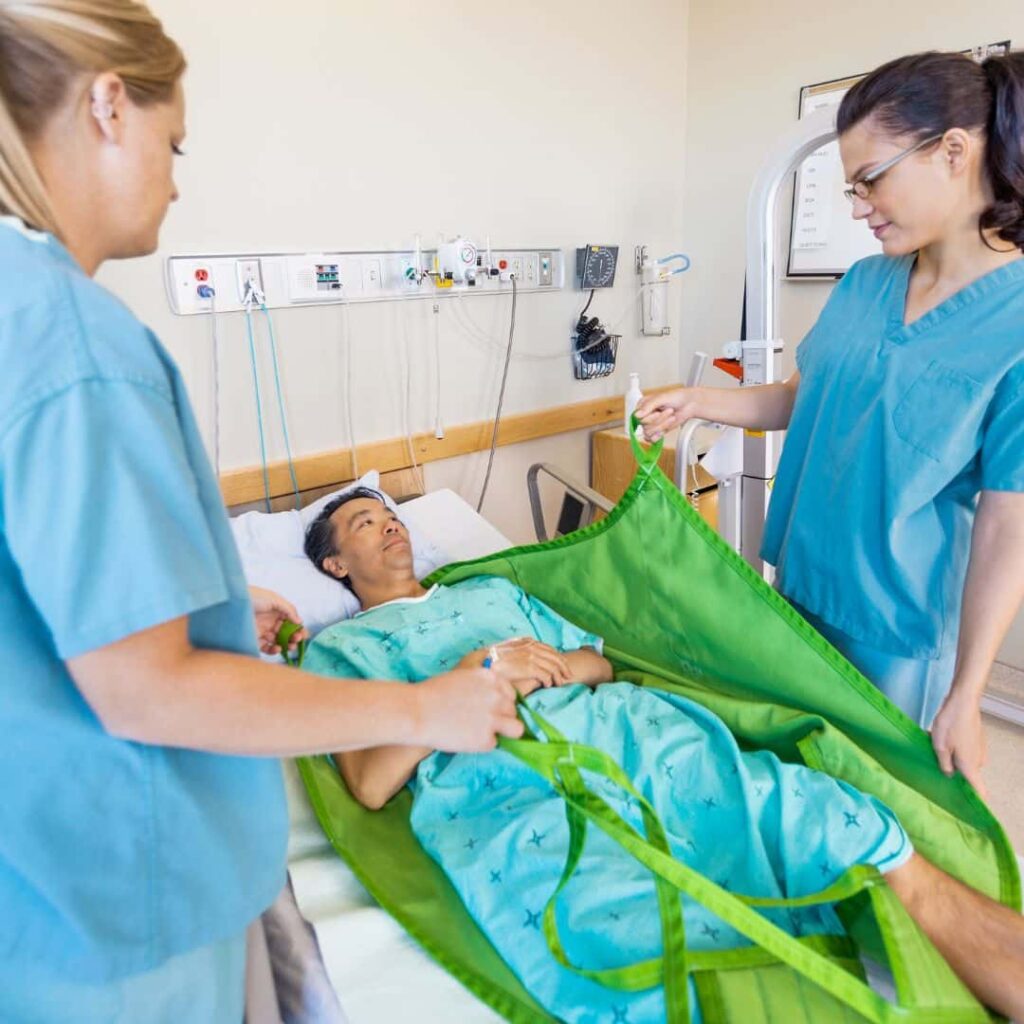
A manual handling course for healthcare workers is nationally accredited training that teaches safe lifting, transfer and patient handling techniques to reduce the risk of serious workplace injuries. In South Australia, the HLTWHS005 Conduct Manual Tasks Safely qualification is the industry benchmark for nurses, aged care workers, disability support staff and other healthcare professionals who regularly carry out manual handling tasks as part of their working day.
Musculoskeletal disorders remain one of the most significant occupational health risks facing the healthcare sector across Australia, including here in Adelaide. Safe Work Australia data consistently shows that healthcare and social assistance workers are among those most likely to sustain serious workplace injuries, with a large proportion directly attributed to unsafe manual handling practices. This guide covers the key requirements, benefits and practical components of manual handling training for healthcare professionals working in South Australia.
Ready to build your workplace safety skills? Enrol in First Aid Pro Adelaide’s nationally recognised HLTWHS005 Manual Handling Course today and gain the hands-on competencies healthcare employers are looking for across SA.

Key Takeaways: Manual Handling Course for Adelaide Healthcare Workers
- HLTWHS005 is the national standard for healthcare manual handling – the HLTWHS005 Conduct Manual Tasks Safely unit is the recognised Australian qualification for healthcare workers performing lifting, patient transfers and manual handling tasks across all care settings.
- Manual handling is a leading cause of injury in healthcare Approximately 40 to 50 percent of serious workplace injuries in healthcare and social assistance are linked to manual handling, with the back and shoulders most commonly affected.
- Healthcare manual handling involves people, not just objects – tasks such as patient transfers, repositioning and mobility assistance carry elevated risk due to unpredictable patient movement and require specialised, practical training.
- WHS laws require risk management and worker training Under Australian and South Australian WHS legislation, employers are legally obligated to provide training and safe systems of work to minimise risks from hazardous manual tasks.
- The Four P’s framework underpins safe manual handling practice – Plan, Position, Pick and Proceed offers a structured, evidence-based approach to reducing injury risk during everyday manual tasks.
- Refresher training supports ongoing safety and compliance – While HLTWHS005 does not carry a national expiry date, refresher training every 12 to 24 months helps workers: maintain competency, keep pace with new equipment and satisfy employer requirements.
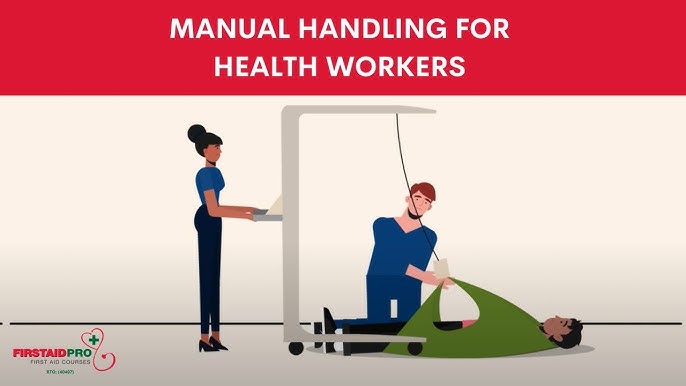
What is Manual Handling in Healthcare?
Manual handling refers to any task requiring a person to use physical force to lift, lower, push, pull, carry, move, hold or restrain an object, load or another person. In healthcare environments, manual handling covers a wide variety of tasks performed every shift by nurses, carers and support workers across Adelaide’s hospitals, aged care facilities and community health services.
Common manual handling tasks in healthcare settings include:
- Transferring patients between beds, chairs and wheelchairs
- Repositioning patients in bed to prevent pressure injuries
- Assisting residents with mobility and walking
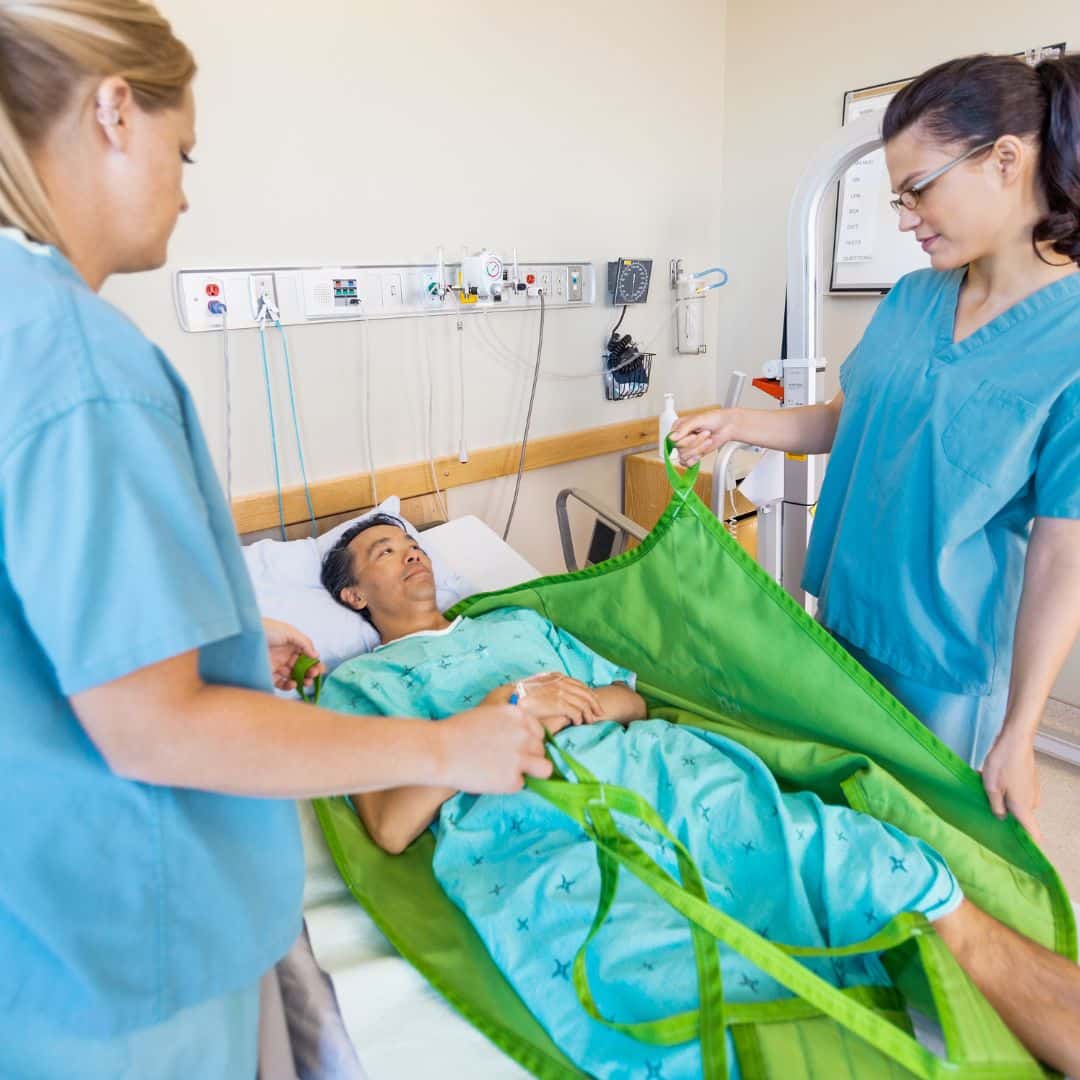
- Operating mechanical lifting equipment such as ceiling hoists and slide sheets
- Moving medical equipment, supplies and trolleys
- Handling and transporting linen, waste and consumables
When carried out without proper technique or adequate training, these everyday activities can cause serious musculoskeletal injuries affecting the back, shoulders, neck and limbs. The physically demanding and repetitive nature of healthcare work, combined with time pressures and unpredictable patient behaviour, significantly elevates the risk of injury.
What Is the HLTWHS005 Manual Handling Course?
HLTWHS005 Conduct Manual Tasks Safely is a nationally recognised unit of competency that equips workers with the practical skills to perform manual tasks safely and in accordance with WHS regulations.
For healthcare workers in Adelaide and across South Australia, this course focuses on:
- Safe patient handling techniques
- Risk assessment for hazardous manual tasks
- Strategies for preventing workplace injuries
- Legal duties and workplace responsibilities under WHS law
Participants who successfully complete the course receive a Statement of Attainment, recognised by employers throughout Australia.
Why Manual Handling Training Matters for Healthcare Workers in Adelaide
The healthcare industry presents unique and complex manual handling challenges that make targeted, practical training essential. Safe Work Australia data shows healthcare workers experience disproportionately high rates of work-related musculoskeletal disorders compared to most other industries, and South Australia is no exception.

Legal and Regulatory Compliance
Under the Work Health and Safety Act 2011 and the Work Health and Safety Regulations 2012, which apply in South Australia, healthcare employers have a clear legal duty to provide safe systems of work. This includes ensuring all staff receive adequate information, training and supervision for manual handling tasks. For healthcare organisations in Adelaide, this means providing HLTWHS005 training or equivalent to all workers involved in patient handling and physical care delivery.
Regulatory bodies including the Aged Care Quality and Safety Commission assess whether care facilities maintain current manual handling training records and implement safe work practices. Failure to comply can lead to enforcement actions, financial penalties and increased insurance costs.
Injury Prevention and Worker Safety
Healthcare workers who complete quality manual handling training consistently report fewer workplace injuries than those without formal training. The course provides practical skills for assessing task risks, selecting and using mechanical aids appropriately, and applying biomechanically sound techniques when handling patients and moving equipment.
Safe Work Australia estimates that preventing workplace injuries contributes $28.6 billion to the Australian economy annually, with healthcare among the sectors seeing the greatest returns through reduced compensation claims and improved workforce productivity.
Additional benefits include stronger compliance performance, better staff morale and improved operational efficiency, making manual handling training a sound investment for Adelaide healthcare employers of all sizes.

Patient Safety and Quality of Care
Safe manual handling practices benefit not only workers but the patients and residents in their care. Correct transfer and repositioning techniques reduce the likelihood of patient falls, skin injuries and discomfort during care delivery. Staff who are properly trained demonstrate greater confidence in using lifting equipment, which encourages appropriate use of mechanical aids rather than unsafe manual lifts.
Healthcare workers with a solid understanding of patient handling principles also provide more dignified, comfortable care. They are better equipped to communicate clearly with patients during transfers and to position them safely for both clinical effectiveness and personal comfort.
HLTWHS005 Manual Handling Course Requirements
The HLTWHS005 Conduct Manual Tasks Safely qualification is the nationally recognised standard for manual handling certification in Australia. This accredited course is designed for healthcare, community services and other industries where manual handling forms a core part of daily work.
Entry Requirements
The course has minimal entry requirements, making it accessible to healthcare workers at any stage of their career. To enrol, participants must:
- Be at least 14 years of age (parental consent required for those under 18)
- Hold a valid Unique Student Identifier (USI) for certification purposes
- Have sufficient language, literacy and numeracy skills to understand safety procedures
- Be physically able to demonstrate manual handling techniques including bending, squatting and lifting
- Have basic computer literacy for online learning components
These requirements ensure all participants can safely engage with both the theoretical content and the hands-on practical component of the training.
Course Structure and Delivery
HLTWHS005 training in Adelaide is delivered through a blended learning model combining online theory with face-to-face practical assessment. This format suits the demanding schedules of healthcare workers while ensuring thorough skill development.
The online theory component covers WHS legislation, risk assessment principles, anatomy and biomechanics, and workplace procedures. Participants complete this in their own time, with most finishing within two to three hours.
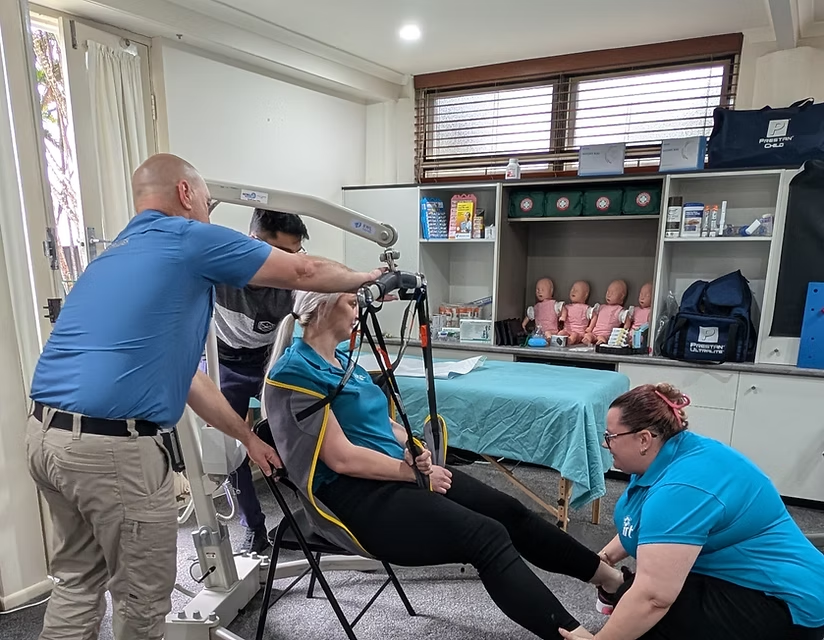
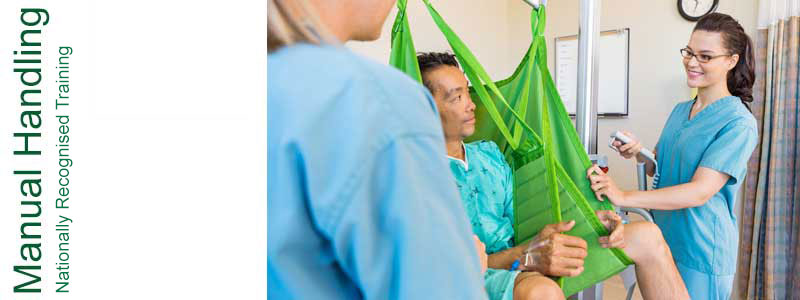
The face-to-face practical session runs for approximately 4 hours and focuses on applying manual handling techniques in realistic workplace scenarios. Experienced instructors guide participants through patient transfers, equipment use and hands-on practice to confirm competency.
Secure your place in First Aid Pro Adelaide’s HLTWHS005 Manual Handling Course. Our blended learning format makes it easy to fit quality training around your healthcare work schedule. Enrol now.
Assessment Methods
To earn the HLTWHS005 Statement of Attainment, participants must demonstrate competency through both written and practical assessments. The written component typically includes multiple choice and short answer questions covering WHS regulations, hazard identification and safe work procedures.
Practical assessment requires participants to demonstrate correct manual handling techniques within simulated workplace scenarios. Assessors evaluate body positioning, communication during team lifts, appropriate use of mechanical aids and application of the Four P’s framework.
Core Manual Handling Skills Covered in the Course
The HLTWHS005 course builds a comprehensive set of practical skills directly applicable to daily patient care tasks in Adelaide’s healthcare and aged care settings. The focus throughout is on preventing injury while upholding the dignity and safety of both workers and patients.
The Four P’s of Manual Handling
The Four P’s framework gives workers a consistent, structured method for approaching any manual handling task. This evidence-based approach reduces injury risk by encouraging assessment and preparation before action is taken.
Plan: Assess the task, identify potential hazards, determine what equipment is needed and map out the safest approach. Take into account the patient’s condition, the environment and available resources.
Position: Establish a stable stance with feet shoulder-width apart, move close to the load or patient, clear the pathway and check body alignment before proceeding.
Pick: Drive the movement with leg muscles rather than the back, keep a neutral spine, hold the load close to the body and avoid twisting at the waist.
Proceed: Move in a smooth, controlled manner, communicate clearly with other team members during coordinated lifts, monitor your body for any signs of strain and adjust your technique if needed.
Patient Handling and Transfer Techniques
Patient transfers are among the highest-risk manual handling activities in healthcare, and the course dedicates significant attention to safe transfer methods. Participants learn how to move patients between beds, chairs, wheelchairs and examination tables while preserving patient dignity and comfort throughout.
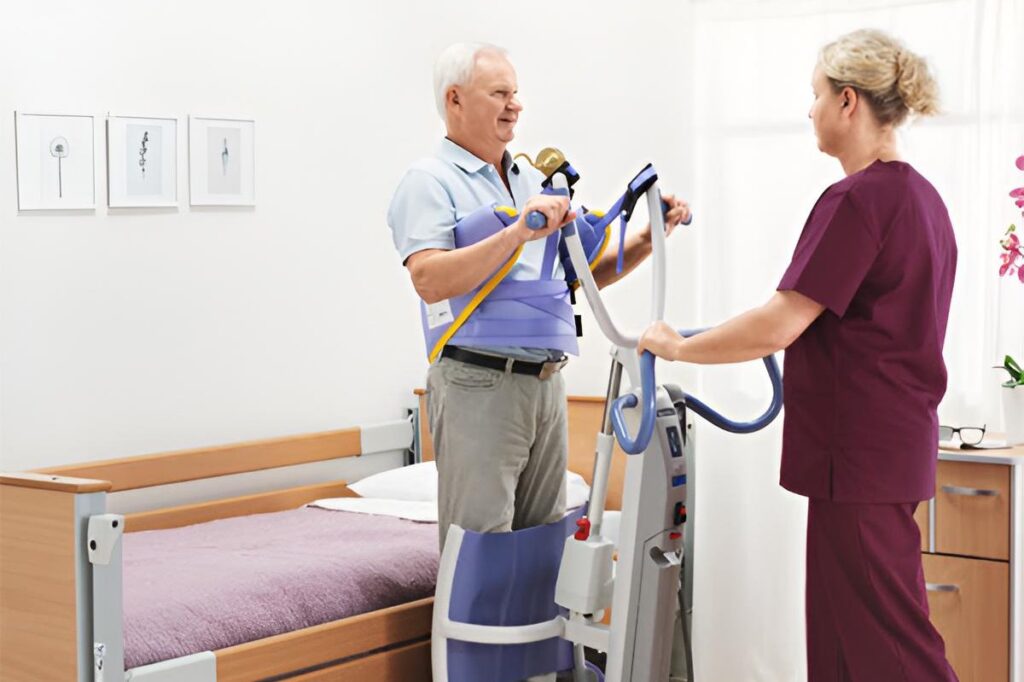
Training covers how to assess a patient’s level of mobility, communicate clearly about what will happen during a transfer, and select the right mechanical aids for each situation. This includes hands-on practice with slide sheets, transfer boards, standing aids and mobile or ceiling-mounted hoists. The course also emphasises knowing when manual assistance should be replaced entirely by mechanical lifting.
Risk Assessment and Hazard Identification
Identifying and managing risk before beginning a manual task is central to the HLTWHS005 approach. Healthcare workers learn how to systematically evaluate tasks by considering load weight, handling frequency, posture demands, environmental factors and individual physical capacity.
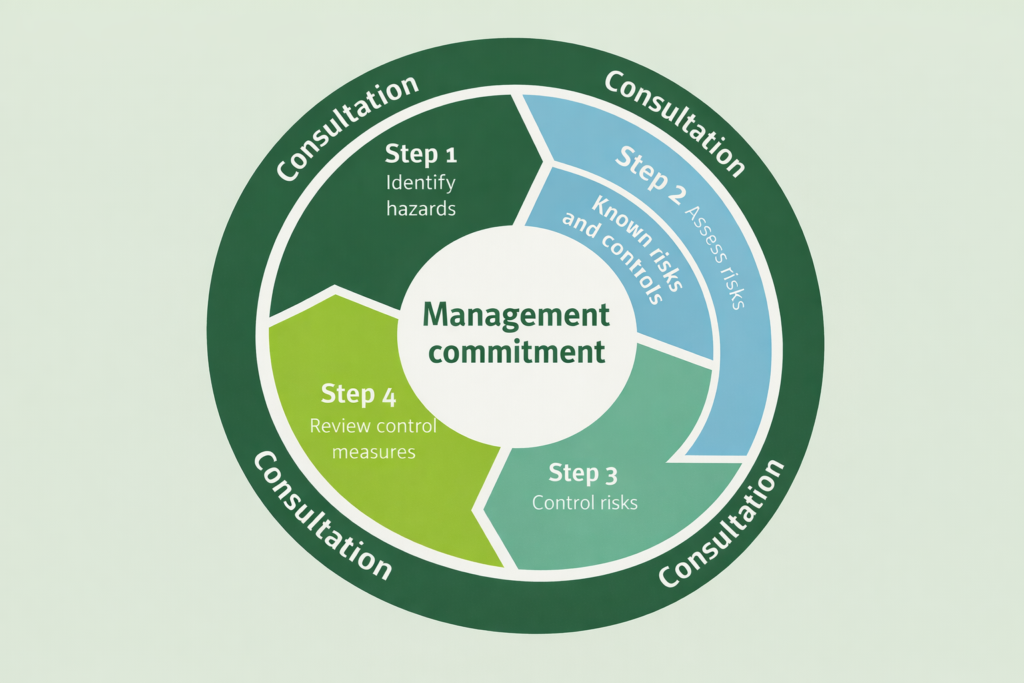
Training is grounded in Safe Work Australia’s risk management framework, teaching workers to spot hazards, assess the likelihood and severity of potential injuries, put controls in place and review whether those controls are effective. This proactive mindset allows healthcare teams across Adelaide to modify tasks and implement appropriate engineering or administrative solutions wherever possible.
Common Manual Handling Equipment in Healthcare Settings
Slide Sheets
Used for repositioning patients in bed. Reduces friction and the manual force required, protecting both worker and patient.
Mobile Hoists
Used for bed to chair transfers with dependent patients. Eliminates the need for manual lifting and significantly reduces fall risk.
Transfer Boards
Used for lateral transfers with partially mobile patients. Preserves patient independence while reducing physical strain on the worker.
Standing Aids
Used to assist patients from a seated to standing position. Supports safe mobilisation and reduces the risk of lifting injuries.
Height-Adjustable Beds
Allow workers to set an optimal working height for care tasks. Prevents awkward postures and reduces back strain during prolonged care delivery.
Key Benefits of HLTWHS005 Certification for Adelaide Healthcare Workers
Completing nationally recognised manual handling certification delivers meaningful benefits for individual healthcare workers, their employers and the people in their care. The return on this training investment spans professional development, personal health and organisational performance.
Career Advancement and Employment Opportunities
HLTWHS005 certification is increasingly listed as an essential requirement by healthcare employers across Adelaide and South Australia, particularly for roles involving direct patient care. Aged care providers, disability support organisations, hospitals and community health services routinely expect this qualification from candidates applying for frontline care positions.
For workers seeking career progression, holding this certification signals a professional commitment to workplace safety. It supports applications for senior care roles, team leader positions and specialist areas such as aged care or rehabilitation. As a nationally recognised Statement of Attainment, the qualification is also transferable across all Australian states and territories.
Personal Health and Injury Prevention
The most direct benefit of completing a manual handling course is protecting your own body. Healthcare workers who understand safe lifting principles and biomechanics experience far fewer musculoskeletal injuries, supporting longer, healthier careers in the sector. Conditions such as chronic back pain and shoulder injuries can be career-ending, and proper training is one of the most effective tools for preventing them.
Workers also report feeling more confident and less anxious when faced with challenging patient handling situations. Understanding how to assess risk and access the right equipment empowers staff to advocate for safe practices within their teams..

Organisational Benefits for Adelaide Healthcare Providers
Adelaide healthcare facilities that invest in comprehensive manual handling training see measurable improvements in safety culture, staff retention and operational efficiency. Lower injury rates lead directly to reduced workers’ compensation insurance costs, decreased sick leave and less disruption to care delivery.
Well-trained teams also produce better patient outcomes and higher satisfaction scores. Correct handling techniques reduce patient injuries from falls and improper transfers. Strong compliance with WHS training requirements also supports positive results in quality audits and accreditation assessments conducted by bodies such as the Aged Care Quality and Safety Commission.
Healthcare professionals who should complete the HLTWHS005 course include:
Registered Nurses and Enrolled Nurses
Registered nurses and enrolled nurses working in hospitals, aged care or community settings across South Australia
Assistants in Nursing and Healthcare Support Workers
Assistants in nursing and healthcare support workers
Aged Care Workers and Personal Care Attendants
Aged care workers and personal care attendants
Disability Support Workers and Community Carers
Disability support workers and community carers
Physiotherapy Assistants and Rehabilitation Support Staff
Physiotherapy assistants and rehabilitation support staff
Patient Transport Officers and Ambulance Support Personnel
Patient transport officers and ambulance support personnel
Mental Health Support Workers
Mental health support workers in residential facilities
Home Care Workers
Home care workers providing in-home support services in Adelaide and surrounding areas
Students undertaking healthcare qualifications such as Certificate III in Individual Support, Certificate III in Health Services Assistance or nursing degrees should also complete manual handling training early in their studies, establishing safe habits from the very beginning of their careers.
Don’t wait until an injury forces the issue. Enrol in First Aid Pro Adelaide’s HLTWHS005 Manual Handling Course today and protect your long-term health while building a stronger, safer healthcare career.

Maintaining Manual Handling Competency Over Time
Manual handling skills need to be regularly refreshed to remain effective and to keep pace with evolving WHS standards and workplace equipment. Industry best practice across Australian healthcare recommends refresher training every 12 to 24 months, depending on workplace policies and the nature of individual roles.
Refresher training gives workers the opportunity to familiarise themselves with new equipment, revisit techniques they find challenging and reinforce safe habits developed during initial training. It also provides a forum to discuss specific workplace scenarios and receive expert guidance on managing difficult manual handling situations.
Between formal training sessions, Adelaide healthcare workers can reinforce their competency by actively participating in workplace safety initiatives. This includes contributing to toolbox talks, reporting hazards and near-misses promptly, taking part in task risk assessments and helping to mentor newer colleagues in safe manual handling practices. Regular checks and maintenance of patient handling equipment are also an important part of sustaining a safe work environment.
Manual Handling Knowledge Check
Test your understanding of key manual handling principles.
Manual Handling Course Adelaide: Supporting Safer Healthcare Workplaces
Completing a manual handling course is one of the most practical investments an Adelaide healthcare worker can make in their long-term health and professional development. The HLTWHS005 qualification delivers the knowledge and hands-on skills needed to protect workers from injury while ensuring safe, respectful and dignified care for patients and residents across South Australia’s healthcare system.
With musculoskeletal injuries accounting for a substantial share of healthcare workplace incidents, formal manual handling certification has moved well beyond optional. Legislative requirements under South Australian WHS law, the expectations of healthcare employers and the very real personal health stakes make this training essential for anyone working in direct patient care, aged care, disability support or community health services in Adelaide.
Training with an experienced provider like First Aid Pro Adelaide means gaining transferable, nationally recognised skills in a format designed to fit around your working life. The blended learning approach ensures both the theoretical grounding and practical confidence needed to handle real-world challenges safely and competently.
Your health and your career are worth protecting. Enrol in a quality HLTWHS005 manual handling course in Adelaide today and join the growing number of South Australian healthcare workers who put safety, professionalism and quality care at the centre of everything they do.
References
- Safe Work Australia. (2023). Work-related Musculoskeletal Disorders. Retrieved from https://www.safeworkaustralia.gov.au
- Safe Work Australia. (2021). Code of Practice: Hazardous Manual Tasks. Commonwealth of Australia.
- WorkSafe Victoria. (2023). Hazardous Manual Handling Identification Tool. State of Victoria.
- WorkCover Queensland. (2023). Manual Tasks Involving the Handling of People: Code of Practice . Queensland Government.
- Comcare. (2022). Lifting and moving items: Office Tool. Commonwealth of Australia.
- Victorian WorkCover Authority. (2023). Healthcare and hospitals: Safety basics. WorkSafe Victoria.
- Australian Skills Quality Authority. (2024). HLTWHS005 Conduct manual tasks safely unit descriptor. Training.gov.au
Frequently Asked Questions
How long does HLTWHS005 certification remain valid?
HLTWHS005 does not carry a national expiry date. However, most healthcare employers in South Australia expect refresher training every 12 to 24 months to maintain practical competency and meet WHS compliance standards. The Statement of Attainment remains valid indefinitely, but skills should be kept current through regular refresher training and workplace practice.
Can I complete the HLTWHS005 course entirely online?
No. HLTWHS005 cannot be completed online only, as the qualification includes mandatory practical assessment components. Training follows a blended format, pairing online theory with a face-to-face practical session in which participants demonstrate safe manual handling techniques and correct equipment use
Is manual handling training consistent across different healthcare settings?
The core principles of HLTWHS005 are nationally consistent, but practical training is contextualised to different healthcare environments. Techniques and equipment vary between hospitals, aged care facilities, disability support services and community health settings across Adelaide and South Australia.
What happens if I do not pass the practical assessment?
Participants who do not initially demonstrate the required competency are typically offered additional coaching and an opportunity for reassessment. HLTWHS005 is competency-based training, meaning certification is awarded once safe manual handling techniques are performed to the required standard, not on the basis of a single attempt.
Is HLTWHS005 certification accepted across all Australian states?
Yes. HLTWHS005 is nationally recognised and accepted by employers in all Australian states and territories, including South Australia. Some employers may require additional site-specific or workplace induction training, but this supplements rather than replaces the HLTWHS005 qualification.