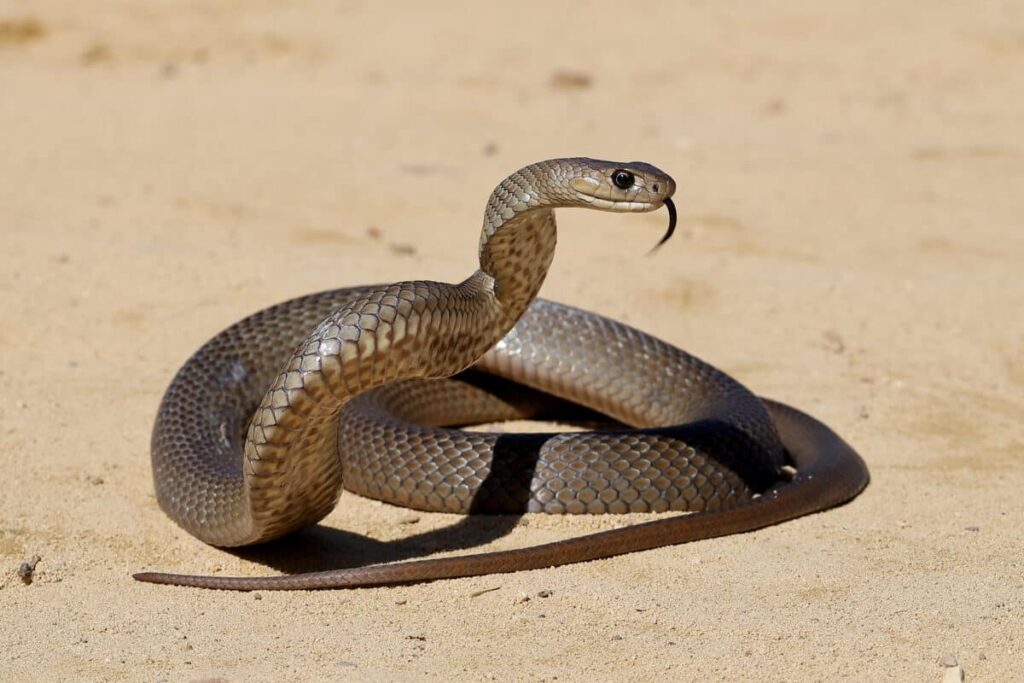
Across Australia, no land snake is responsible for more serious bites and fatalities than the Eastern Brown Snake. Ranked as the second most venomous land snake in the world, this species is widespread from Queensland through to South Australia, making it a potentially significant hazard for people living in Adelaide’s suburbs, regional communities, and anyone working or exploring in snake-prone environments.
Australia is home to several highly venomous species, but the eastern brown consistently tops national medical statistics. Knowing how to respond correctly to a bite can quite literally be life-saving. This Adelaide-focused guide walks you through the essentials: how to recognise the snake, what its venom does, how symptoms progress, and what first aid actions are proven to save lives.
Want to be fully prepared? Enrol in a nationally recognised First Aid course with First Aid Pro Adelaide and learn life-saving snake bite response skills.
Key Takeaways
- The Eastern brown snake causes more deaths than any other Australian snake.
- Symptoms may be minimal at first; early collapse is a major warning sign.
- Pressure Immobilisation Bandage is the only correct first aid method.
- Up to 80% of bites may be dry, but must still be treated as emergencies.
- Prevention and first aid training can reduce risk.
Essential Action Steps
- Call 000 immediately
- Apply PIB from bite site to the entire limb
- Keep the victim still
- Never wash the bite or cut the wound
- Maintain first aid training and stay prepared
Why the Eastern Brown Snake Is Australia’s Most Dangerous Species
The Eastern Brown Snake is involved in more than 60% of all fatal snake bites in Australia. Its risk profile comes from a combination of:
- Highly toxic venom
- Fast-acting physiological effects
- Wide distribution, including populated regions across Australia
- Regular encounters near farmland, urban edges, and rural townships
In Adelaide and surrounding regions, sightings most commonly occur in:
- The Adelaide Hills
- Riverland
- Murraylands
- Northern suburbs and outer-metro areas
- Agricultural districts across the Mid North and Barossa Valley
Its adaptability makes the Eastern Brown snake one of the most successful and dangerous reptiles on the continent.
Identifying the Eastern Brown Snake
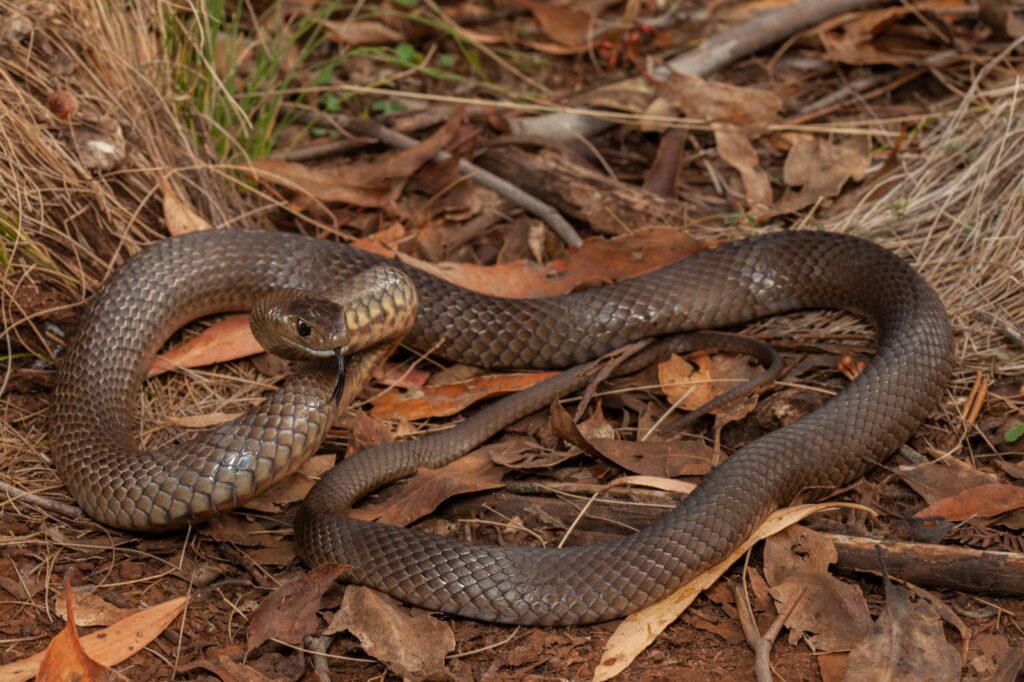
The eastern brown snake (Pseudonaja textilis) is often mistaken for other harmless brown-coloured species, making accurate recognition important.
Physical Features
- Long, slender build (typically 1.2–1.5 metres; up to 2 metres)
- Smooth, glossy scales
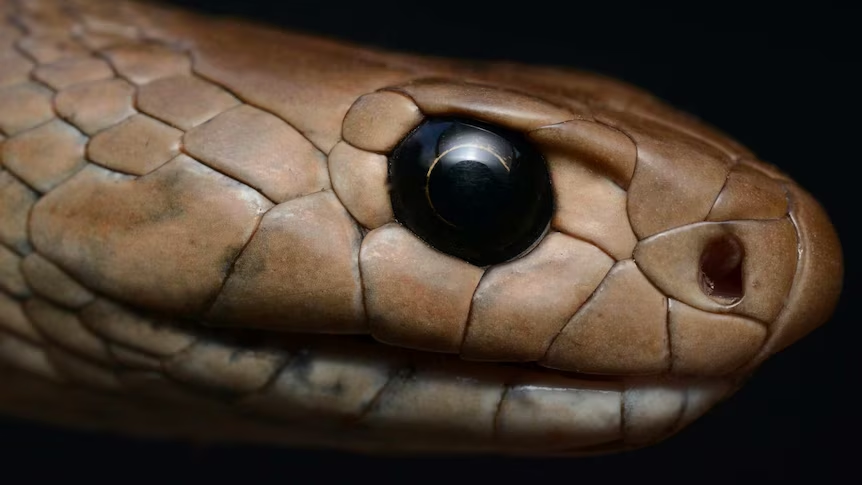
- Orange to light brown iris with a dark rim
- Cream to yellow belly with irregular dark spotting
- Juveniles often show prominent banding
Colour Range
Despite the name, an eastern brown snake may appear:
- Light brown
- Dark brown
- Grey-brown
- Almost black
- Occasionally with orange or steel-grey tones

Distribution Across Australia (Including SA)
State/Territory | Habitat Presence | Common Locations |
Queensland | High density | Coastal and inland regions |
New South Wales | Widespread | Eastern & central zones |
Victoria | Moderate | North & east |
South Australia | Limited but significant | Eastern borders, agricultural regions, Adelaide Hills, Barossa, Riverland |
ACT | Present | Bushland & open terrain |
Eastern browns prefer open woodlands, grasslands, farmland, and semi-urban edges, making many Adelaide outskirts ideal habitat.
Understanding Venom Potency: Why the Eastern Brown Is So Deadly
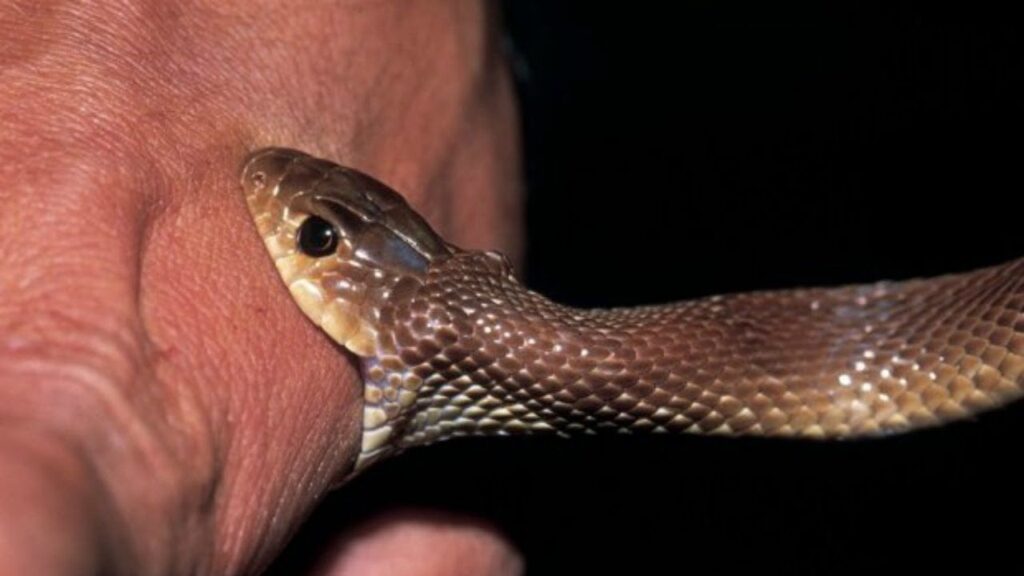
Eastern brown venom is among the most toxic ever recorded for a land snake. Its LD50 value of 0.053mg/kg, as established by CSL researchers in Melbourne, indicates astonishing potency—enough for one bite to theoretically kill almost 200,000 mice.
Toxic Components
- Neurotoxins: Disrupt nerve signalling; may cause paralysis
- Cardiotoxins: Affect heart rhythm and cardiovascular function
- Pro-coagulants: Cause severe clotting abnormalities
- Tissue-destroying enzymes: Contribute to local cell damage
A typical bite releases 5–10 mg of venom; the human lethal dose is 1–2 mg.
Even though the Inland Taipan has stronger venom drop-for-drop, eastern browns cause far more medical emergencies simply because encounters are so common.
Recognising Eastern Brown Snake Bite Symptoms
Eastern brown snake bites can be dangerously deceptive. Many victims report little or no pain, and fang marks may be barely noticeable.
Initial Bite Signs
- Minimal puncture marks
- Lack of swelling or bruising
- Mild local discomfort or none at all
A defining feature of eastern brown envenomation is early collapse, which can occur within 10–60 minutes.
Symptom Progression Timeline
Time After Bite | Symptoms |
0–30 minutes | Collapse, nausea, dizziness, headache |
30–60 minutes | Vomiting, abdominal pain, weakness |
1–2 hours | Swallowing difficulty, blurred/double vision |
2–6 hours | Breathing difficulties, bleeding issues |
6+ hours | Kidney failure, respiratory arrest (if untreated) |
Critical Red Flags
- Drooping eyelids
- Slurred speech
- Paralysis developing in stages
- Irregular heartbeat
- Spontaneous bleeding (gums, nose, urine)
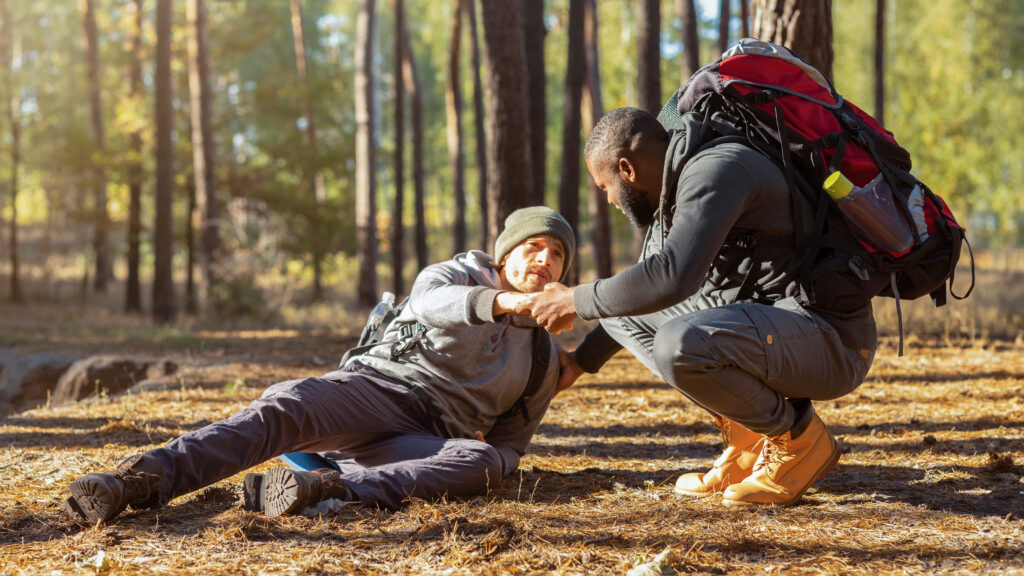
Always treat any snake bite as life-threatening. Time is critical.
Dry Bites: Why You Should Never Assume You’re Safe
Research suggests around 80% of eastern brown strikes may be dry, meaning no venom is injected. However:
- You cannot confirm this without hospital testing
- Symptoms can be delayed
- Panic and increased movement can worsen outcomes
Therefore, every snake bite must be managed exactly the same way until cleared by doctors.
The Pressure Immobilisation Bandage (PIB): Gold Standard Snake Bite First Aid
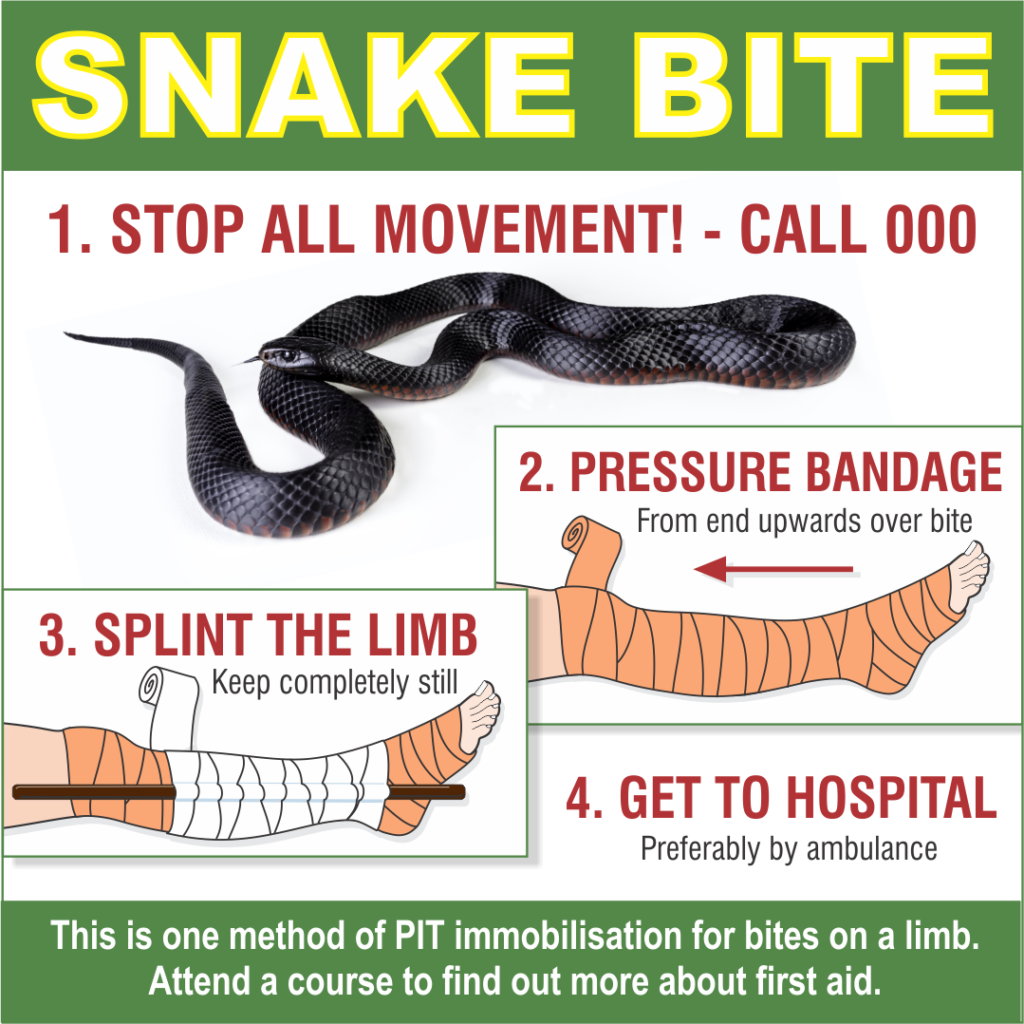
Following ARC Guideline 9.4.1, PIB slows the spread of venom through the lymphatic system.
Before you do anything, remember your DRSABCD:
DRSABCD First Aid Framework
- Danger – ensure the area is safe
- Response – check consciousness
- Send for help – call 000 immediately
- Airway – clear airway
- Breathing – monitor breathing
- CPR – commence if required
- Defibrillation – apply AED if trained and available
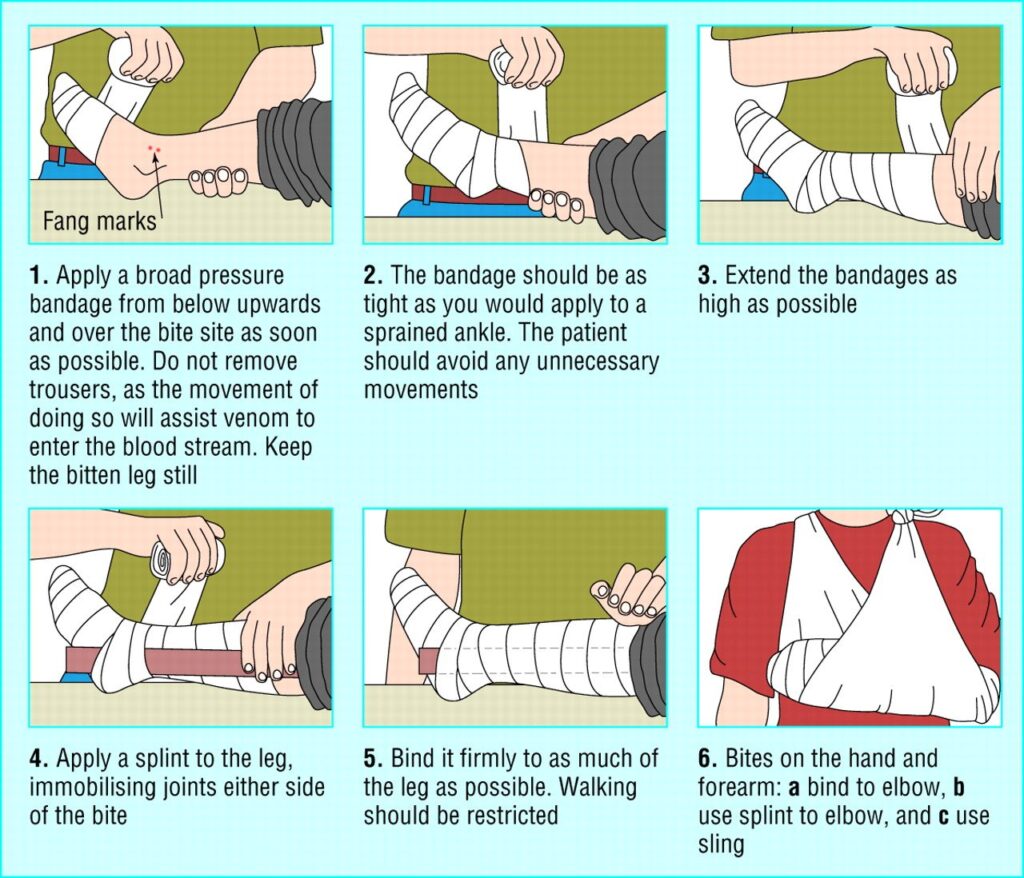
| Correct Pressure Immobilisation Bandage (PIB) Application | ||
|---|---|---|
| Step | Action | Key Points |
| 1 | Bandage over bite site | Use a broad elastic bandage (10–15 cm wide) |
| 2 | Start wrapping from extremities | Begin at fingers or toes of the affected limb |
| 3 | Continue up entire limb | Apply firm pressure – similar to a sprained ankle bandage |
| 4 | Check circulation | Perform nail blanch test – colour should return to pink |
| 5 | Apply splint | Immobilise joints above and below the bite |
| 6 | Mark bite site | Use a pen on the bandage or take a photo |
The bandage must be firm enough that sliding a finger underneath is difficult, but circulation is still present.
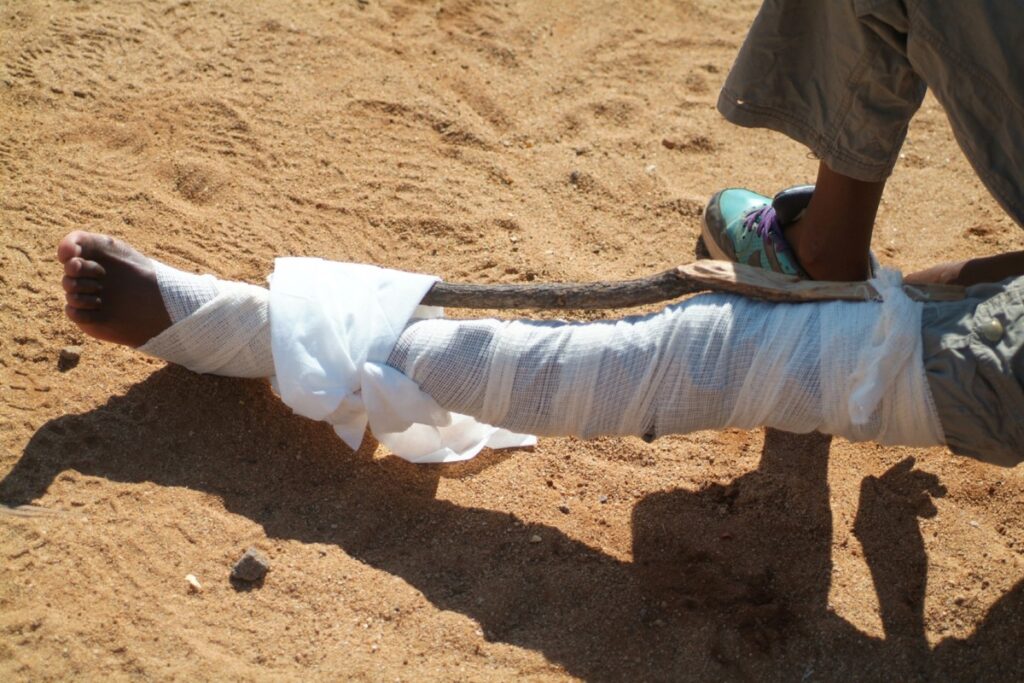
Splinting: Immobilisation Saves Lives
Movement accelerates venom flow. A properly applied splint is just as critical as pressure bandaging.
Keeps muscles still to slow venom spread through the lymphatic system.
Maintains consistent pressure over the entire limb.
Minimises pumping action that moves venom toward the heart.
Improvised Splint Options
- Sticks or sturdy branches
- Rolled magazines or newspapers
- Tent poles or trekking poles
- Cardboard or timber boards
For arm bites, combine pressure bandaging with a sling rather than a rigid splint.
Common Errors to Avoid
- Using a tourniquet
- Only bandaging above or below the bite
- Removing bandages before hospital treatment
- Applying ice or heat
- Trying to catch or kill the snake
All of these actions can significantly worsen outcomes.
Emergency Response After a Snake Bite
Your goal is to slow venom spread, keep the person still, and get professional help as fast as possible.
Immediate Priorities
Move the person away from the snake. Do not try to catch or kill it.
Request an ambulance immediately. Do not delay to “wait and see”.
Lay them down, keep them completely still, and reassure them to reduce panic and movement.
Apply a firm pressure immobilisation bandage to the limb, splint it, and keep the whole body as still as possible.
If safe, remove rings, watches, or tight clothing from the affected limb before swelling develops.
Continuously monitor breathing and responsiveness until help arrives.
Communicating with Emergency Services
- Exact location (include nearest cross street/landmark if possible)
- Time of bite
- Symptoms present
- Any pre-existing medical conditions
- Whether PIB has been applied
If the Person Becomes Unconscious
Follow DRSABCD. If they are not breathing normally, commence CPR immediately.
Nationally Recognised First Aid Training Available in Adelaide
Snake bite training is incorporated into several accredited first aid units. These are commonly completed by outdoor workers, parents, teachers, and recreational hikers throughout SA.
Course Type | Duration | Certification | Snake Bite Content |
~5.5 hours | 3 years | PIB technique + emergency response | |
~7.0 hours | 3 years | Expanded snake bite modules | |
~6.5 hours | 3 years | Child-specific scenarios |
Strengthen your emergency response capability — enrol in a First Aid Pro Adelaide course today and gain essential life-saving skills.
Preventing Eastern Brown Snake Encounters in South Australia
The Eastern Brown snake is highly active in SA during the warmer months and after rainfall.
Seasonal Patterns & Adelaide Snake Risk: Prevention Guide
Seasonal Patterns
Most sightings and bite risk occur through spring and summer.
Movement rises after rain and on hot days when snakes relocate and hunt.
Heightened activity and defensive behaviour can occur in early summer.
High-Risk Adelaide Areas
Long grass and bushy boundaries around homes and walking trails.
Barossa, Murraylands, and Mid North properties with rodents and shelter sites.
Rural outbuildings, stacked timber, and stored materials.
Mulch, garden beds, and compost piles that attract prey and provide cover.
Irrigation, pet bowls, troughs, and creeks during extreme heat.
Property Safety Measures
Reduce hiding places around sheds, fences, and pathways.
Clear rubbish piles, timber stacks, and debris that create shelter.
Rodents attract snakes — secure food sources and manage pests.
Block holes under sheds, steps, decks, and structures.
Useful in rural/high-risk areas when installed correctly.
Safe Behaviour When a Snake Is Nearby
Freeze in place to avoid startling the snake.
Move away calmly without sudden movements.
Most snakes will retreat if they have space.
This is when most bites occur.
Knowledge Test: Eastern Brown Snake Safety Quiz
Select an answer for each question, then press Check answers.
1) What is the first action after a suspected Eastern Brown Snake bite?
2) How firm should PIB bandaging be?
3) How many Eastern Brown Snake bites are estimated to be dry?
4) Which symptom is particularly associated with Eastern Brown envenomation?
5) When should PIB be removed?
Take the next step in emergency preparedness by training with First Aid Pro Adelaide and learning skills that truly save lives.
References
Australian Museum. (2024). Eastern Brown Snake Fact Sheet. Sydney: Australian Museum Research Institute.
Australian Venom Research Unit, University of Melbourne. (2024). Venomous Animals and Their Venoms: Australia. Melbourne: AVRU Publications.
Australian Museum. (2024). Eastern Brown Snake Fact Sheet. Sydney: Australian Museum Research Institute.
The Royal Children’s Hospital Melbourne: Snakebite
Health direct: Snake Bites
Frequently Asked Questions
How quickly can an Eastern Brown Snake bite become fatal?
Potentially within 30 minutes to 2 hours if untreated. Early collapse may occur within the first hour, making rapid first aid and emergency medical care essential.
Can a PIB be applied incorrectly and still help?
Yes — even imperfect application provides more benefit than doing nothing. The only dangerous error is applying it like a tourniquet.
What if I couldn’t identify the snake?
Do not worry about species identification. Treat all bites as venomous and focus on PIB, minimising movement, and calling 000.
How long should bandages stay on?
Until trained medical professionals remove them in hospital. Removing PIB prematurely can cause sudden venom spread.
Are Eastern Brown snakes aggressive?
No. They avoid humans but will defend themselves if cornered or provoked. Most bites occur when someone tries to move or kill the snake.