Hypothermia is a dangerous medical condition that develops when the body’s core temperature falls below 35°C, affecting the brain, heart, lungs and other vital organs. Although many Australians associate hypothermia with snowfields and freezing weather, it can also occur after cold-water immersion, prolonged exposure to rain and wind, serious illness, trauma, or inadequate heating during winter. Recognising the symptoms early and providing correct first aid treatment can significantly improve survival and recovery outcomes.
From hikers in the Adelaide Hills and campers in South Australia’s Flinders Ranges to older adults living through cold winter nights, hypothermia can affect people in many different situations. This guide explains the causes of hypothermia, the warning signs to watch for, the three clinical stages of the condition, and the recommended emergency management techniques based on Australian first aid principles.

Quick Facts About Hypothermia
- Hypothermia occurs when core body temperature drops below 35°C.
- Cold water can trigger hypothermia far faster than cold air.
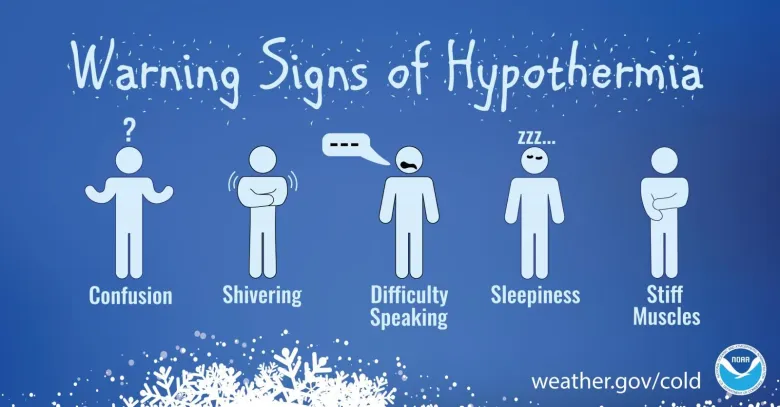
- Early symptoms include intense shivering, confusion, fatigue and poor coordination.
- A hypothermic person who suddenly stops shivering may be deteriorating rapidly.
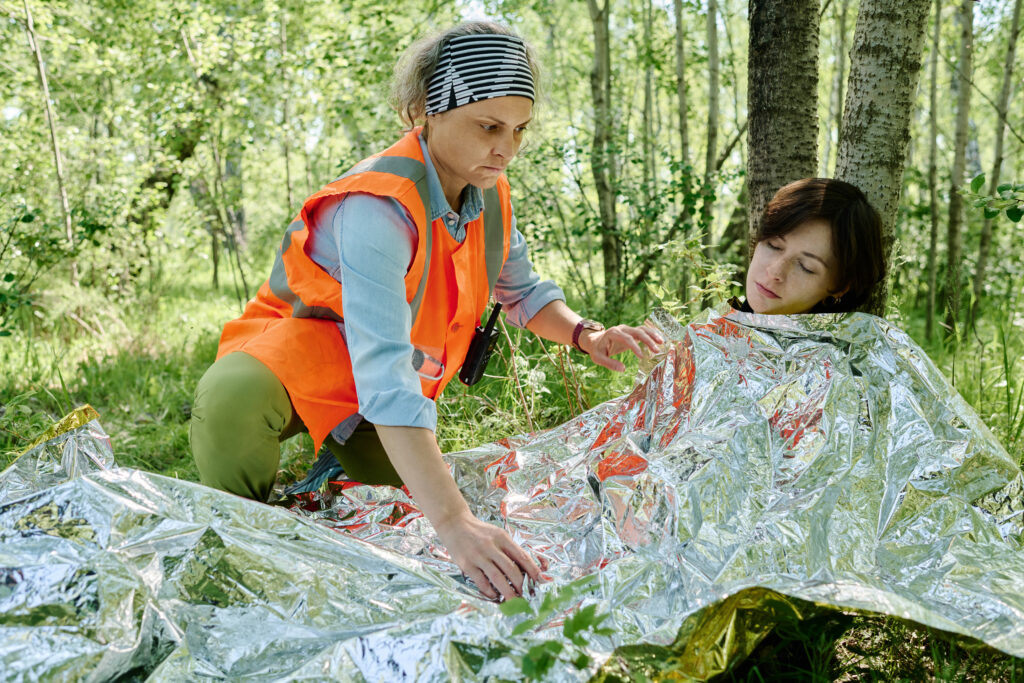
- First aid focuses on preventing further heat loss and applying gentle rewarming.
- Moderate and severe hypothermia require urgent medical care.
- CPR should continue in hypothermic cardiac arrest until paramedics or a medical officer advise otherwise.
Want practical emergency response skills? First Aid Pro Adelaide delivers nationally recognised first aid and CPR training designed to help everyday Australians respond confidently during medical emergencies, including hypothermia and cardiac arrest situations.
Understanding Hypothermia
The human body normally maintains a stable internal temperature between approximately 36°C and 37°C. When heat loss becomes greater than the body’s ability to produce heat, core temperature begins to fall. Once it drops below 35°C, clinicians classify the condition as hypothermia.
This is far more serious than simply feeling cold. Hypothermia interferes with circulation, breathing, muscle function and brain activity. Without prompt treatment, it may progress to unconsciousness, cardiac arrest and death.
Medical professionals generally divide hypothermia into two broad categories:
Type | Description |
Primary hypothermia | Caused directly by environmental exposure such as cold air, wind, rain or water |
Secondary hypothermia | Occurs because another illness or injury disrupts the body’s ability to regulate temperature |
Secondary hypothermia may develop in people affected by trauma, severe infection, low blood sugar, burns, hypothyroidism or certain medications.
Can Hypothermia Happen in Australia?
Yes — and more often than many people realise.
Although Australia is known for its warm climate, hypothermia still causes serious medical emergencies every year. South Australia, Victoria, Tasmania, alpine NSW regions and coastal waterways all present genuine risk factors during colder months.
Cold-water immersion is especially dangerous because water removes body heat far more efficiently than air. A person can become hypothermic even on a relatively mild day if they are immersed in cold ocean, river or lake water for long enough.
Australians at Increased Risk Include:
- Older adults
- Babies and young children
- Homeless individuals
- Bushwalkers and campers
- Fishers, surfers and kayakers
- Outdoor workers
- People affected by alcohol or drugs
- Trauma patients
- People with chronic illness
Alcohol is particularly dangerous because it widens blood vessels near the skin surface, increasing heat loss while also impairing judgement.
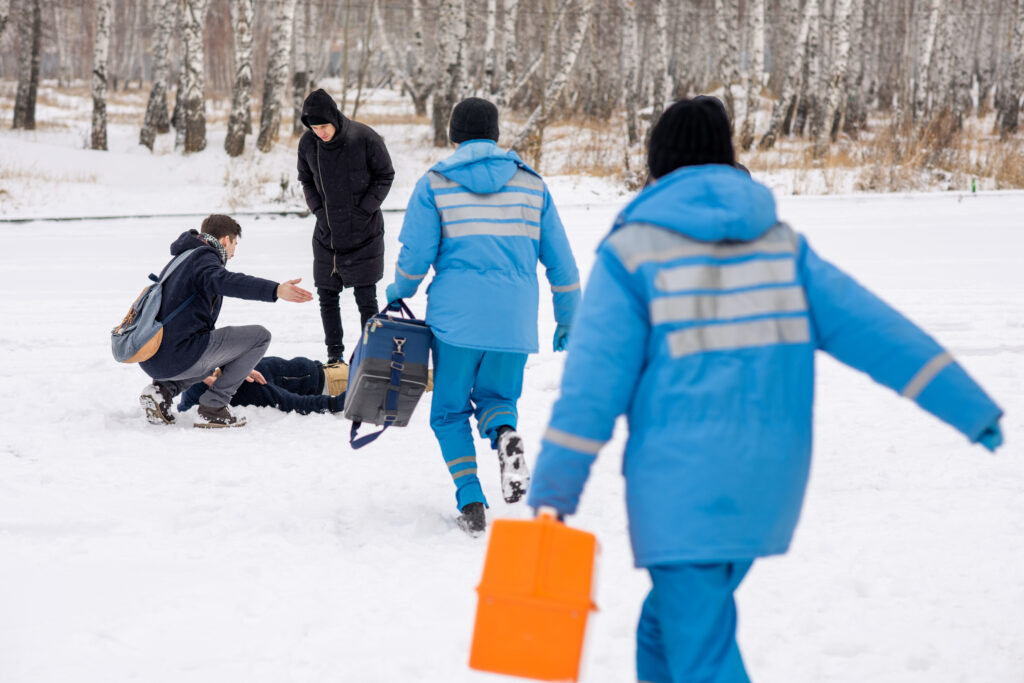
Common Causes of Accidental Hypothermia
Accidental hypothermia develops when the body loses heat faster than it can replace it.
Environmental Exposure
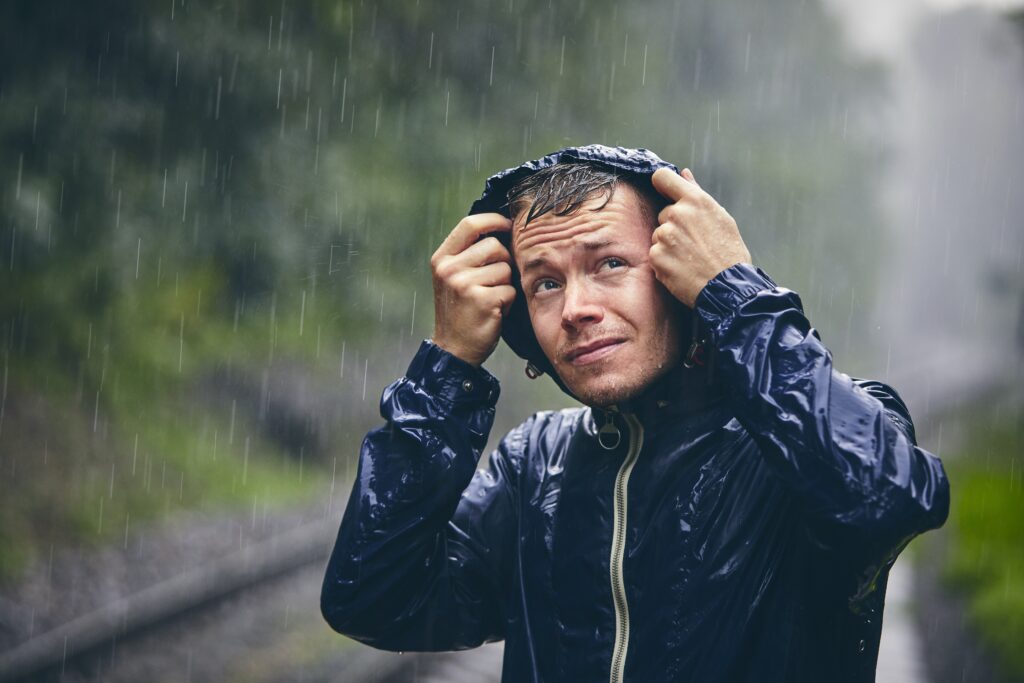
The most obvious cause is prolonged exposure to cold weather, especially when combined with wind or rain. Wet clothing dramatically increases heat loss by reducing insulation.
Environmental Triggers Include:
- Cold wind exposure
- Heavy rain
- Falling into cold water
- Inadequate shelter
- Wet clothing
- Sleeping outdoors
- Extended exposure to cold ground surfaces
Water exposure remains one of the most dangerous scenarios because the body cools rapidly in water.
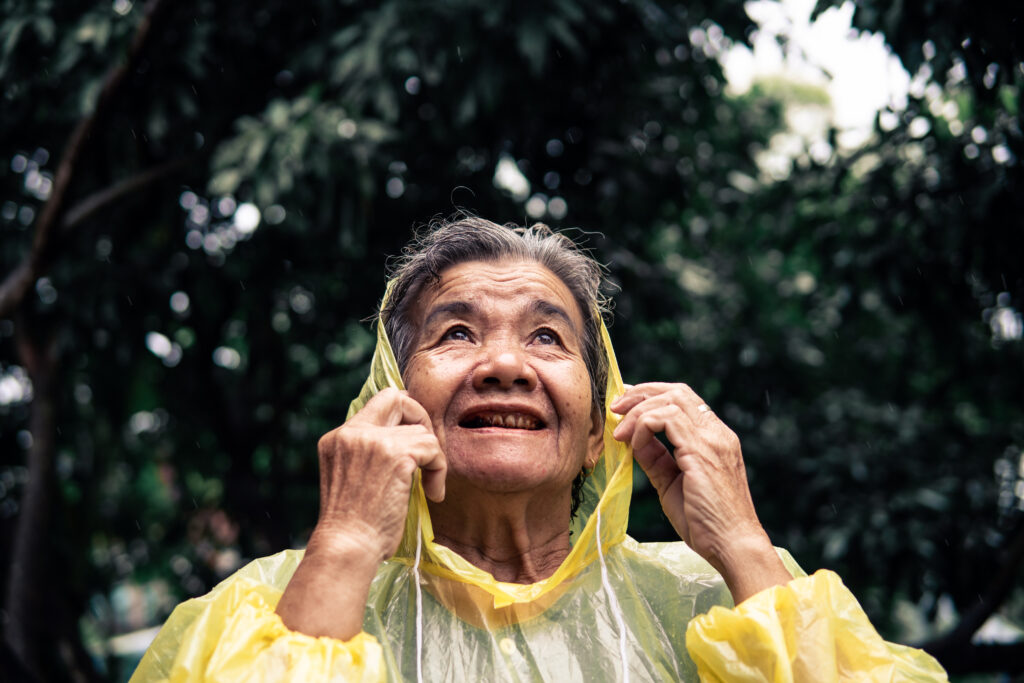
Medical Conditions That Increase Risk
Some health conditions reduce the body’s ability to regulate temperature properly.
Risk Factor | Effect on the Body |
Advanced age | Reduced heat production and weaker shivering response |
Alcohol intoxication | Increased heat loss and poor decision-making |
Hypoglycaemia | Reduced energy available for heat generation |
Hypothyroidism | Slowed metabolism |
Major trauma | Blood loss and impaired circulation |
Severe infection (sepsis) | Disrupted temperature regulation |
Malnutrition | Reduced insulation and lower energy reserves |
Certain medications | Impaired thermoregulation |
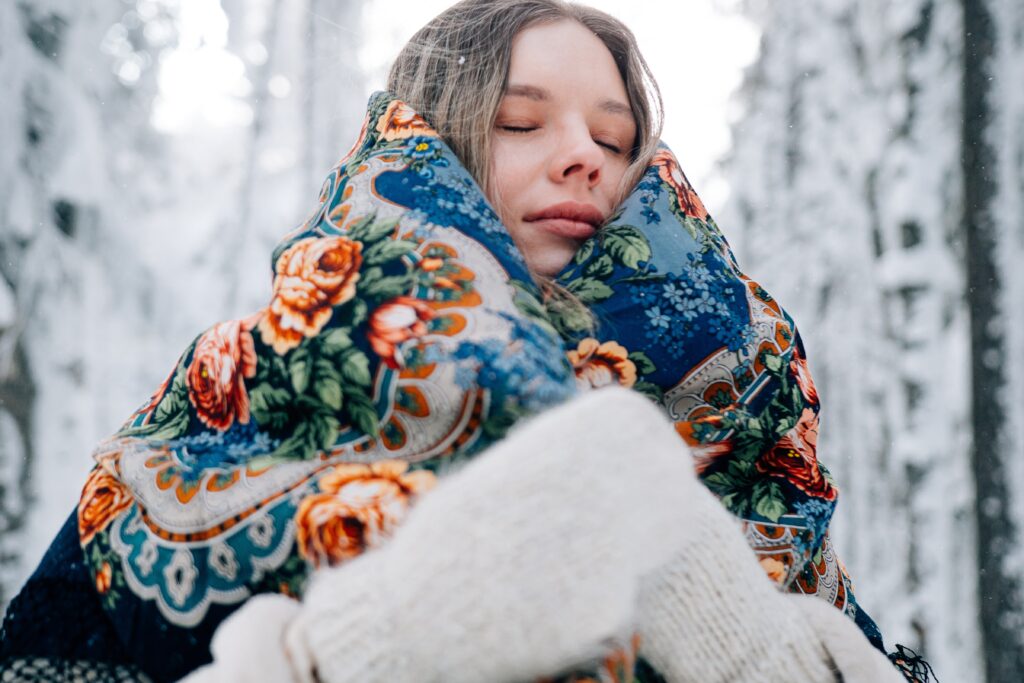
The Three Stages of Hypothermia
Emergency clinicians classify hypothermia into three major stages according to core body temperature and observable symptoms.
📊 Hypothermia Stages Overview
Stage | Core Temperature | Main Symptoms |
Mild | 32°C–35°C | Shivering, confusion, poor coordination |
Moderate | 28°C–32°C | Drowsiness, slowed pulse, shivering stops |
Severe | Below 28°C | Unconsciousness, cardiac arrest risk |
Mild Hypothermia Symptoms
During mild hypothermia, the body is still actively attempting to warm itself.
Shivering is usually the earliest and most obvious sign. The body increases muscle activity to generate heat.
Signs and Symptoms of Mild Hypothermia
- Uncontrolled shivering
- Pale or cold skin
- Goosebumps
- Clumsiness
- Slurred speech
- Mild confusion
- Irritability
- Reduced coordination
- Faster heart rate
A useful reminder sometimes used in wilderness medicine is the “umbles”:
- Stumbles
- Mumbles
- Fumbles
- Grumbles
People in mild hypothermia are usually still conscious and responsive, making this an important stage for early intervention.
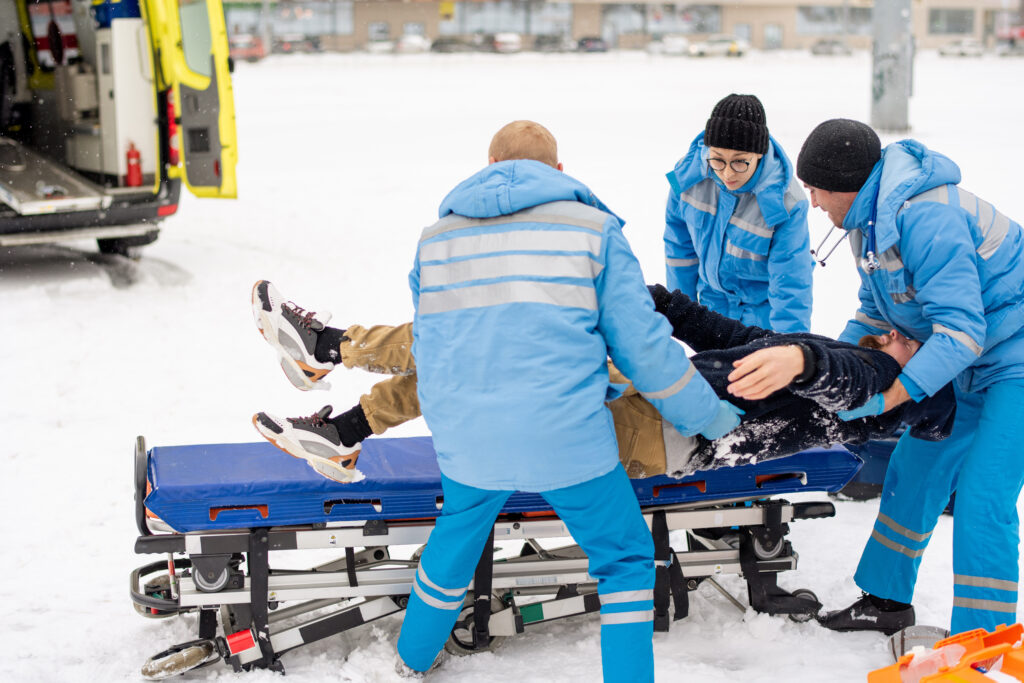
Moderate Hypothermic Symptoms
As body temperature continues to fall, the body’s natural defence systems begin failing.
One of the most dangerous warning signs is when shivering suddenly stops. This does not mean recovery — it usually indicates worsening hypothermia.
Symptoms of Moderate Hypothermia
- Extreme fatigue
- Drowsiness
- Increasing confusion
- Slow breathing
- Slow pulse
- Muscle rigidity
- Blue lips or fingertips
- Poor responsiveness
- Possible collapse
At this stage, the risk of dangerous cardiac arrhythmias rises significantly.
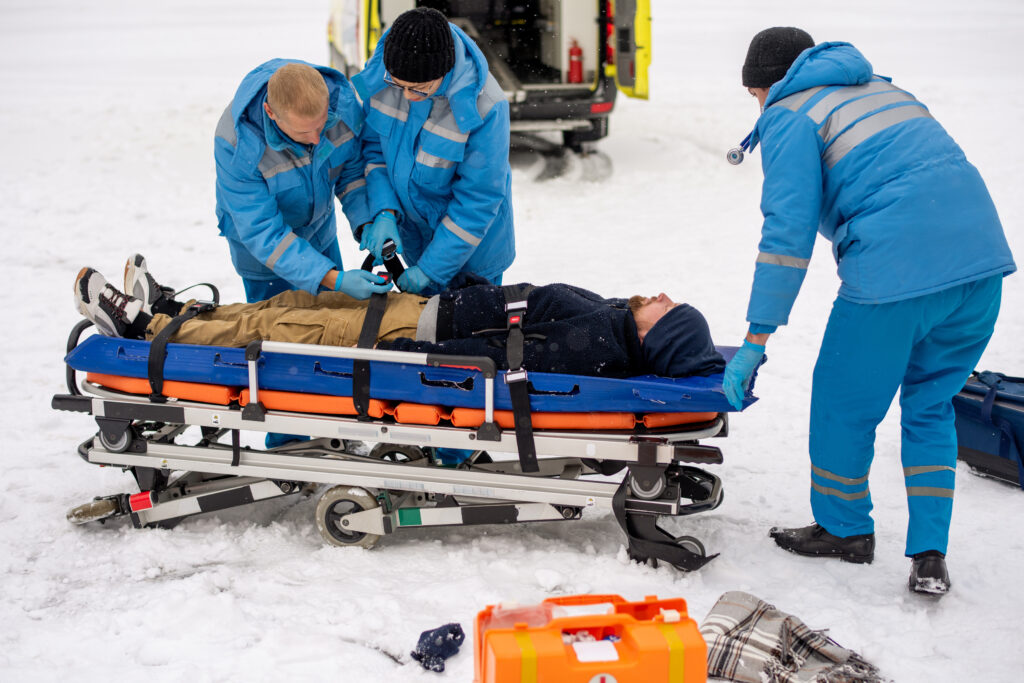
Severe Hypothermia and Cardiac Arrest
Severe hypothermia is life-threatening and requires urgent advanced medical care.
The colder the heart becomes, the more unstable its electrical activity becomes. Ventricular fibrillation — a chaotic heart rhythm that prevents circulation — is one of the greatest risks.
Signs of Severe Hypothermia
- Unconsciousness
- Very slow or absent breathing
- Weak or absent pulse
- Dilated pupils
- Severe muscle stiffness
- Deep cyanosis
- Cardiac arrest
A critical principle in emergency medicine is:
“Nobody is dead until they are warm and dead.”
Some severely hypothermic patients have survived after prolonged resuscitation and aggressive hospital rewarming.
Recognising the Signs of Hypothermia Quickly
Cold exposure can become dangerous fast. Watch for changes in the body, behaviour and level of alertness.
🔴 Physical Symptoms
- Shivering
- Cold skin
- Pale or blue skin colour
- Slow breathing
- Weak pulse
- Muscle stiffness
- Dilated pupils
🔴 Behavioural Symptoms
- Confusion
- Poor decision-making
- Slurred speech
- Memory problems
- Loss of coordination
- Unusual behaviour
- Progressive drowsiness
If someone has been exposed to cold conditions and displays these symptoms, treat the situation as hypothermia immediately.
Call Triple Zero (000) if the person:
- Stops shivering
- Becomes confused
- Becomes drowsy
- Collapses
- Is unresponsive
- Is not breathing normally
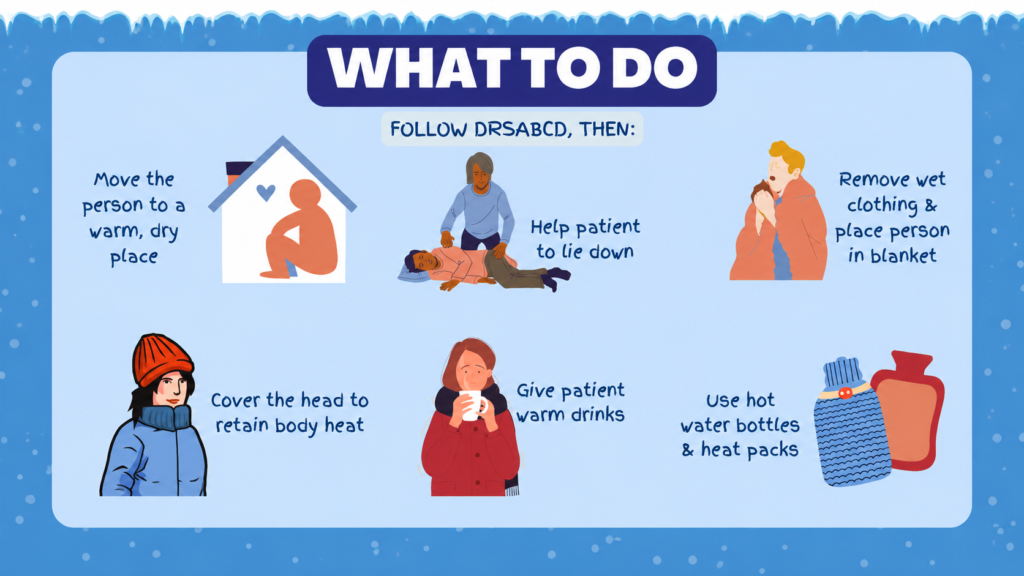
First Aid for Hypothermia
Correct first aid can slow deterioration and help preserve life until paramedics arrive. The main goals are:
- Prevent further heat loss
- Support breathing and circulation
- Apply gentle rewarming
Step-by-Step Hypothermia First Aid
Step 1 — Ensure Safety and Call 000
Move carefully and avoid putting yourself at risk. Call Triple Zero (000) immediately for moderate or severe hypothermia.
Step 2 — Move the Person Out of the Cold
Protect them from:
- Wind
- Rain
- Cold surfaces
- Water exposure
Place blankets, sleeping mats or dry clothing underneath them to reduce conductive heat loss from the ground.
Step 3 — Remove Wet Clothing Carefully
Wet clothing rapidly drains body heat.
Remove it slowly and gently while minimising unnecessary movement.
Step 4 — Insulate and Protect
Wrap the person in:
- Dry blankets
- Sleeping bags
- Thermal blankets
- Jackets
- Waterproof outer layers
Cover the head as well, since substantial heat can escape through the scalp.

Step 5 — Apply Gentle Rewarming
Place warm packs wrapped in cloth near:
- Armpits
- Groin
- Sides of the neck
These areas contain major blood vessels that help distribute warmth.
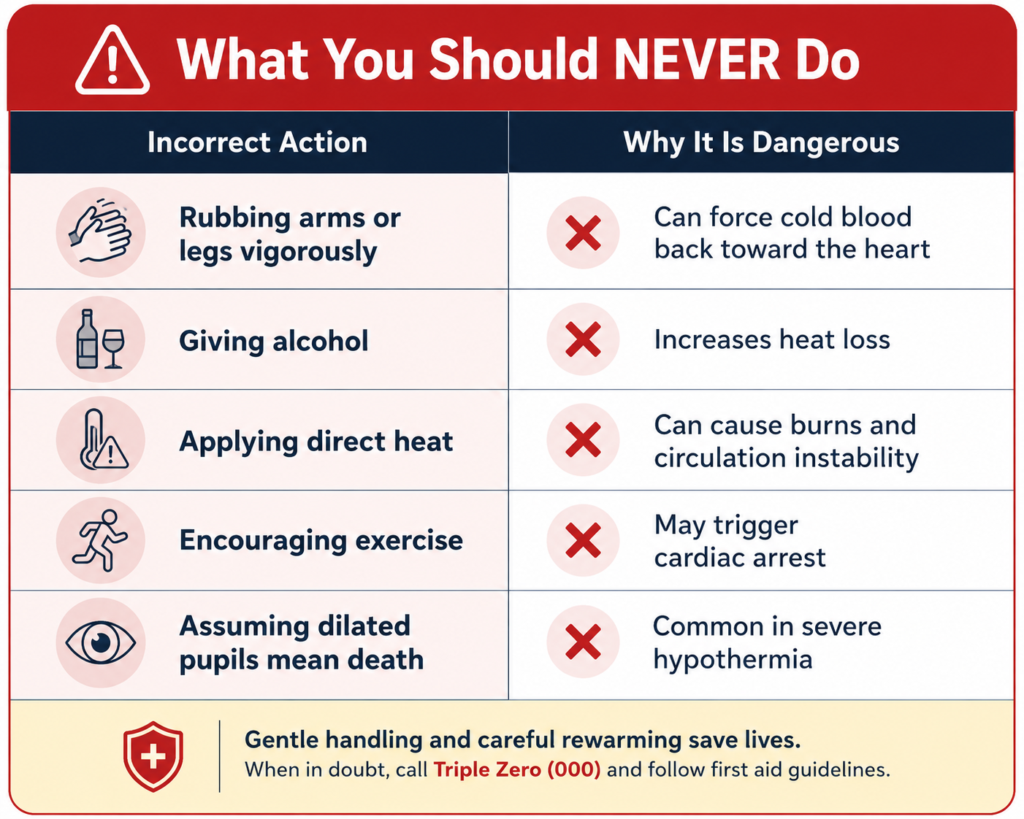
Avoid direct heat sources.
Step 6 — Offer Warm Fluids if Conscious
If the person is fully alert and able to swallow safely:
- Offer warm sweet drinks
- Avoid alcohol
- Avoid very hot drinks
Warm fluids may help support heat production and hydration.
Step 7 — Monitor Closely
Continue monitoring:
- Breathing
- Pulse
- Conscious state
Keep the person lying flat and as still as possible until help arrives.
Learn emergency response skills that could save a life. First Aid Pro Adelaide Courses provide nationally recognised training in CPR, first aid and emergency management delivered by experienced trainers in locations across Adelaide.
CPR in Hypothermic Cardiac Arrest
If a hypothermic person is unresponsive and not breathing normally:
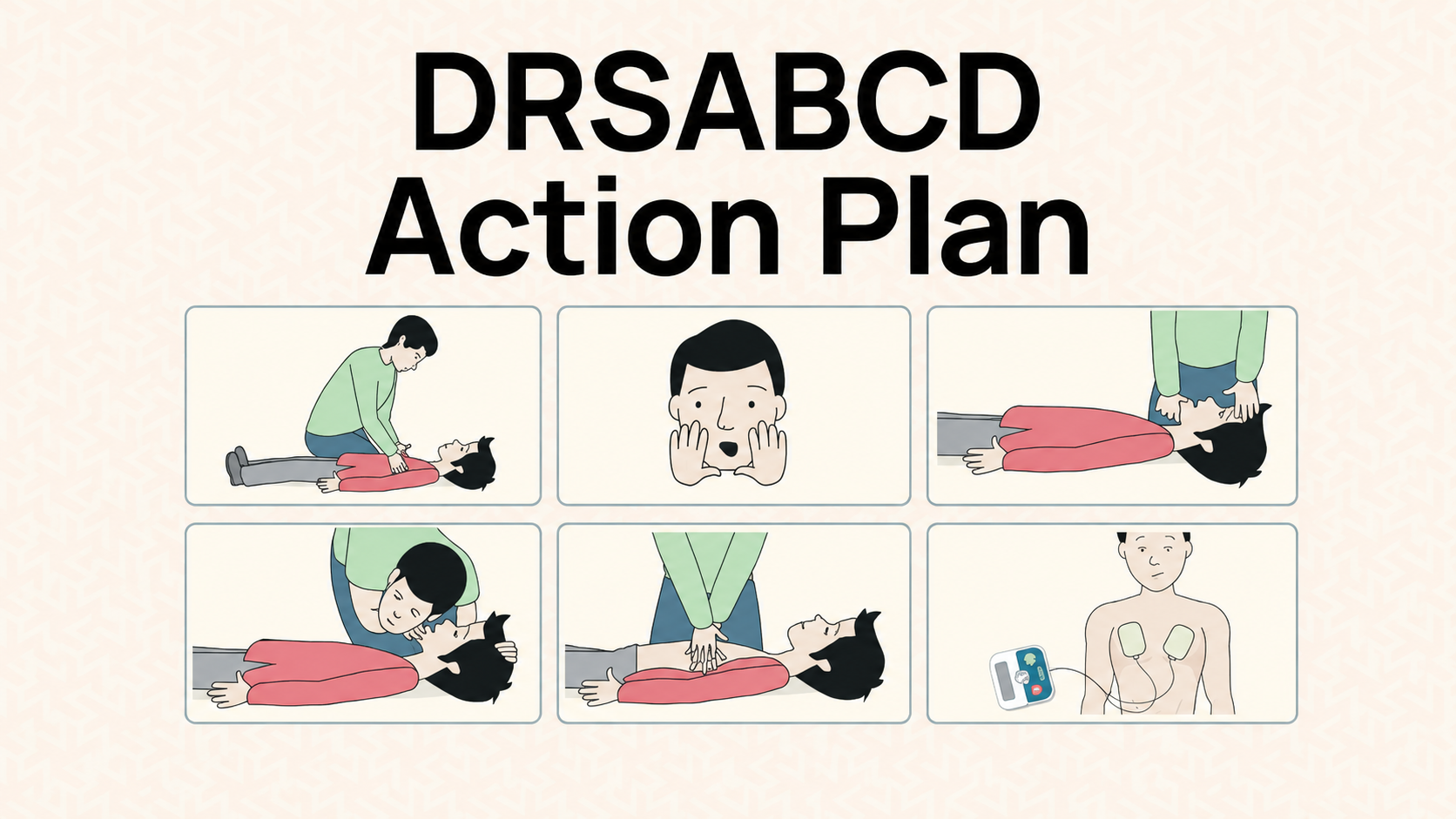
- Follow DRSABCD
- Start CPR immediately
- Use an AED if available
Paramedics and hospital clinicians may continue prolonged resuscitation because severe hypothermia can sometimes protect the brain by slowing metabolism.
Continue CPR until:
- Paramedics take over
- A medical officer directs otherwise
Practical Rewarming in Outdoor Settings
🏔️ Building a Hypothermia Wrap
A wilderness hypothermia wrap helps reduce ongoing heat loss.
Layering Method
- Ground insulation
- Dry clothing or blankets
- Sleeping bag or thermal blanket
- Waterproof outer layer
- Insulated warm packs
- Head covering
This layered approach is widely recommended in wilderness medicine and prehospital emergency care.
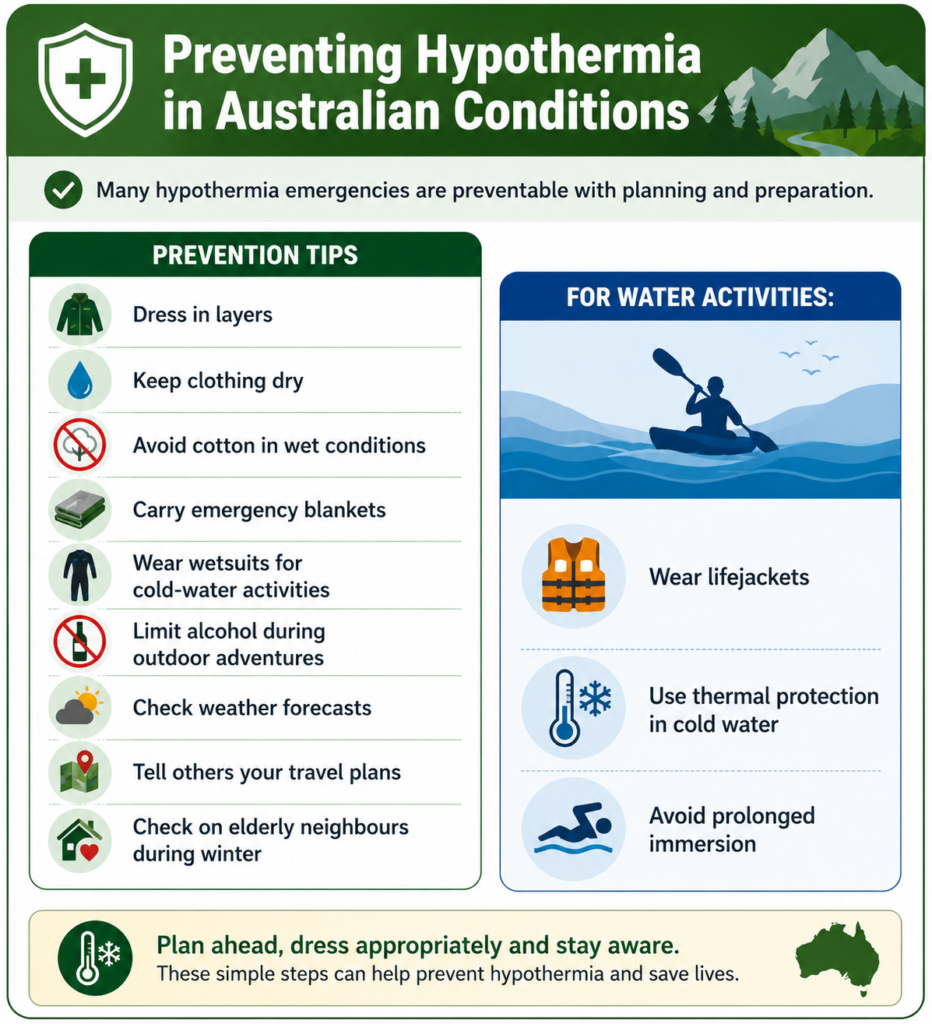
Hypothermia First Aid Quiz
Test your knowledge with this quick refresher.
Question 1
At what temperature is a person considered hypothermic?
Question 2
A person exposed to cold conditions suddenly stops shivering. What may this indicate?
Question 3
Which is the correct first aid treatment?
Question 4
Should CPR be started on a severely hypothermic person who is not breathing normally?
Question 5
Which cardiac rhythm is especially dangerous in severe hypothermia?
Build confidence before emergencies happen. First Aid Pro Adelaide Training offers nationally recognised first aid and CPR courses designed to prepare Australians for real-world emergencies at home, work and outdoors.
Related Reading
- Paal P, Pasquier M, Darocha T, et al. Accidental Hypothermia: 2021 Update. International Journal of Environmental Research and Public Health. 2022;19(1):501. doi:10.3390/ijerph19010501
- Australian Resuscitation Council (ARC). Guideline 9.3.3 – Accidental hypothermia. ARC & New Zealand Resuscitation Council; 2021. Available at: resus.org.au
- Emergency Care Institute – NSW Health. Hypothermia: Clinical Management Tool. NSW Agency for Clinical Innovation; Updated November 2024. Available at: aci.health.nsw.gov.au
- Wilderness Medical Society. Practice guidelines for the out-of-hospital evaluation and treatment of accidental hypothermia. Wilderness & Environmental Medicine. 2019;30(4S):S47–S69.
- Better Health Channel: Hypothermia
Frequently Asked Questions
Can hypothermia occur in mild weather?
Yes. Wind, rain and cold-water immersion can all trigger hypothermia even when air temperatures are relatively mild.
Is hypothermia always caused by freezing temperatures?
No. Many cases occur in temperatures well above freezing, especially when people are wet, injured or exposed for long periods.
How quickly can hypothermia develop in water?
Cold water can reduce body temperature rapidly. Depending on the water temperature, severe hypothermia may develop within 30–60 minutes.
Is frostbite the same as hypothermia?
No. Hypothermia affects the body’s core temperature, while frostbite involves freezing of local body tissues such as fingers or toes.
When should I call Triple Zero for hypothermia?
Call 000 immediately if the person is confused, drowsy, unconscious, not breathing normally, or has stopped shivering after cold exposure.