Key Takeaways
- Choking is a potentially fatal emergency that demands fast, calm action from whoever is present.
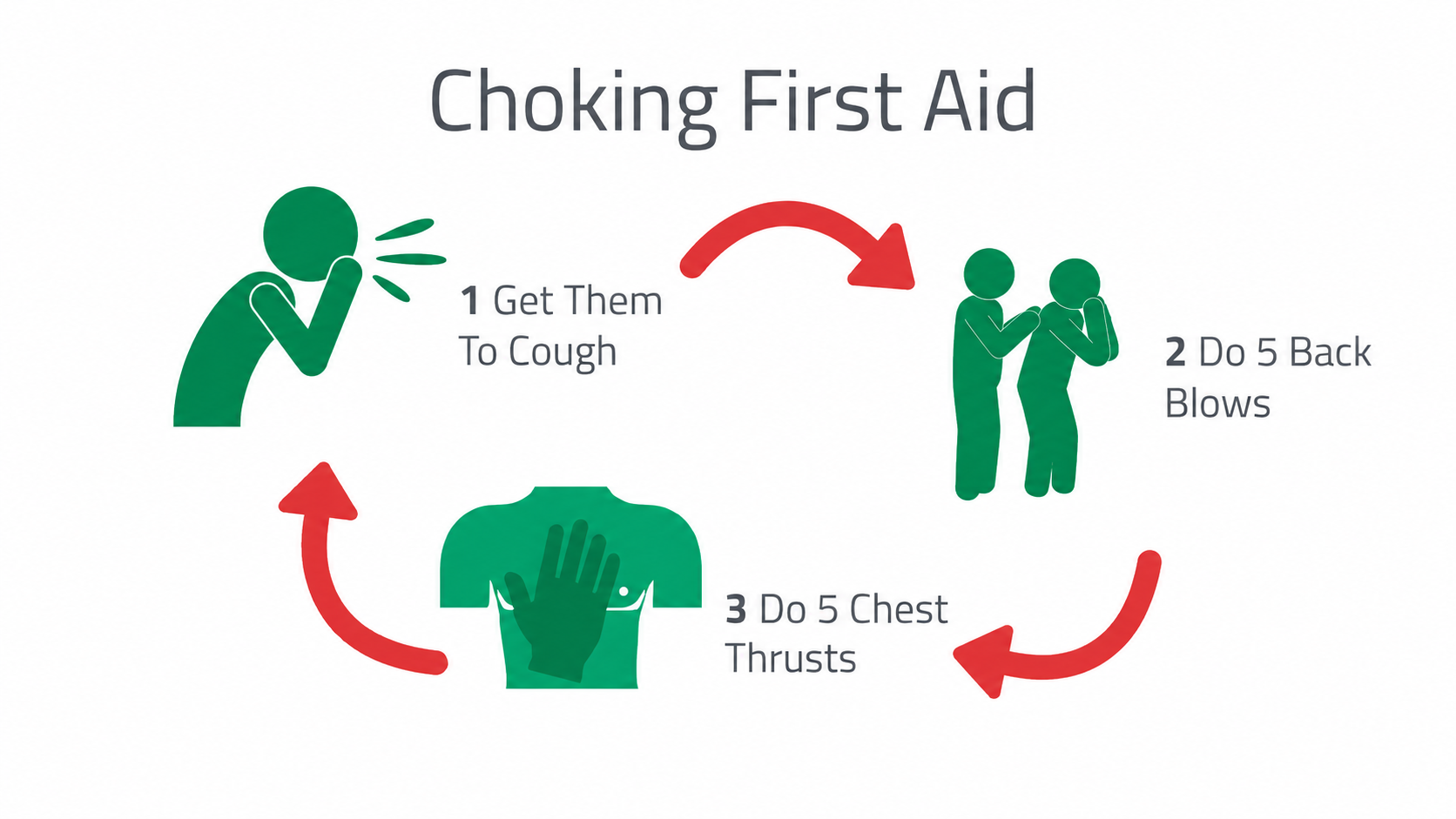
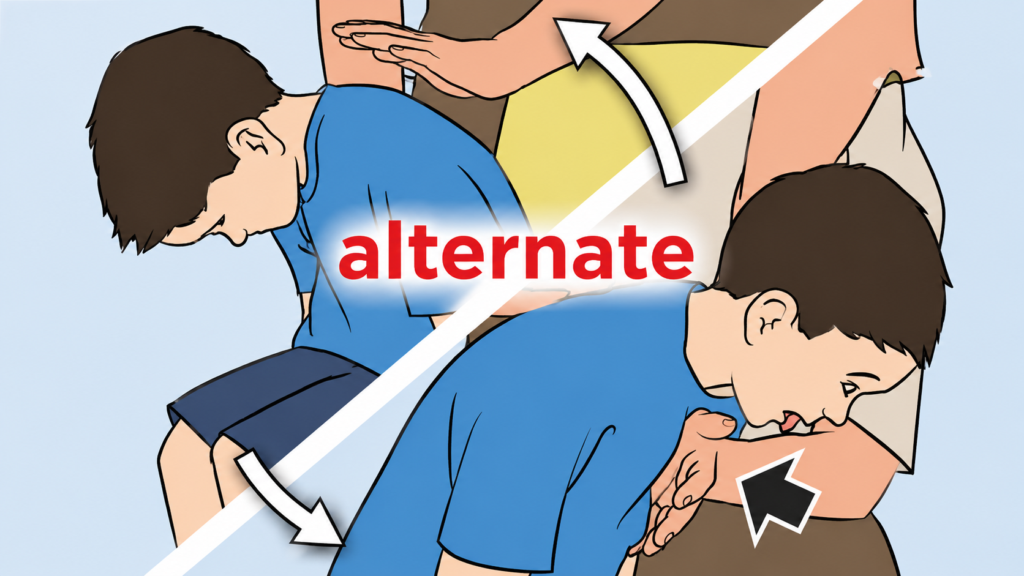
- The 5 steps for choking first aid for an adult or child over 1 year are: encourage coughing, call 000, deliver up to 5 back blows, deliver up to 5 chest thrusts, then alternate until help arrives or CPR becomes necessary.
- Australia does not use the Heimlich manoeuvre — back blows and chest thrusts are the evidence-based standard endorsed by the Australian Resuscitation Council (ARC).
- If the person turns blue, goes limp, or loses consciousness, begin CPR immediately, starting with chest compressions.
- Reading about these steps is a starting point — hands-on training through First Aid Pro gives you the practical skills and composure to act when every second counts.
Why Knowing How to Respond to Choking Could Save a Life
First aid is the immediate care provided to someone who is injured or suddenly unwell, before professional medical help takes over. Choking first aid is a core component of the nationally accredited HLTAID011 course because rapid recognition and a structured response can be the deciding factor between survival and serious harm.
Choking is a recognised cause of preventable death across Australia — incidents occur in homes, schools, restaurants, aged care facilities, and workplaces every day, including right here in Adelaide. Because there is very little time between the onset of a choking emergency and the risk of irreversible harm, the person closest to the casualty is often their most important source of help.
That is the fundamental value of first aid: it puts life-saving capability into the hands of everyday people who are prepared to use it.

What Is Choking and Why Does It Happen?
Choking occurs when a foreign object — most often food or a small item — becomes lodged in the throat or airway rather than passing into the oesophagus. The blockage restricts or completely cuts off airflow to the lungs, and without oxygen, irreversible brain damage can begin within four to six minutes.
A partial blockage may still allow some air to pass, which means a forceful cough can sometimes resolve the situation without additional help. A complete blockage allows no airflow at all, and without prompt intervention it will lead to loss of consciousness and, if untreated, death.
Choking can happen to anyone, at any age, and in any setting. Young children are especially at risk because they explore their environment with their mouths, and any object smaller than a 20-cent coin poses a serious choking hazard for children under three. In adults, the most common triggers include large pieces of meat, dense bread, and food that has not been properly chewed. The risk is ever-present — and preparation is the most reliable safeguard.

Common Causes of Choking in Adults and Children Over 1 Year
Food that is too large, too tough, or insufficiently chewed — particularly common in older adults and busy meal settings.
Small objects such as coins, buttons, beads, or toy components — an ongoing risk for young children.
Eating too quickly, speaking while eating, or being distracted at mealtimes.
Laughing or sudden movement while food is still in the mouth.
Medical conditions that impair swallowing function.
Children under three are especially vulnerable because their airways are much smaller.
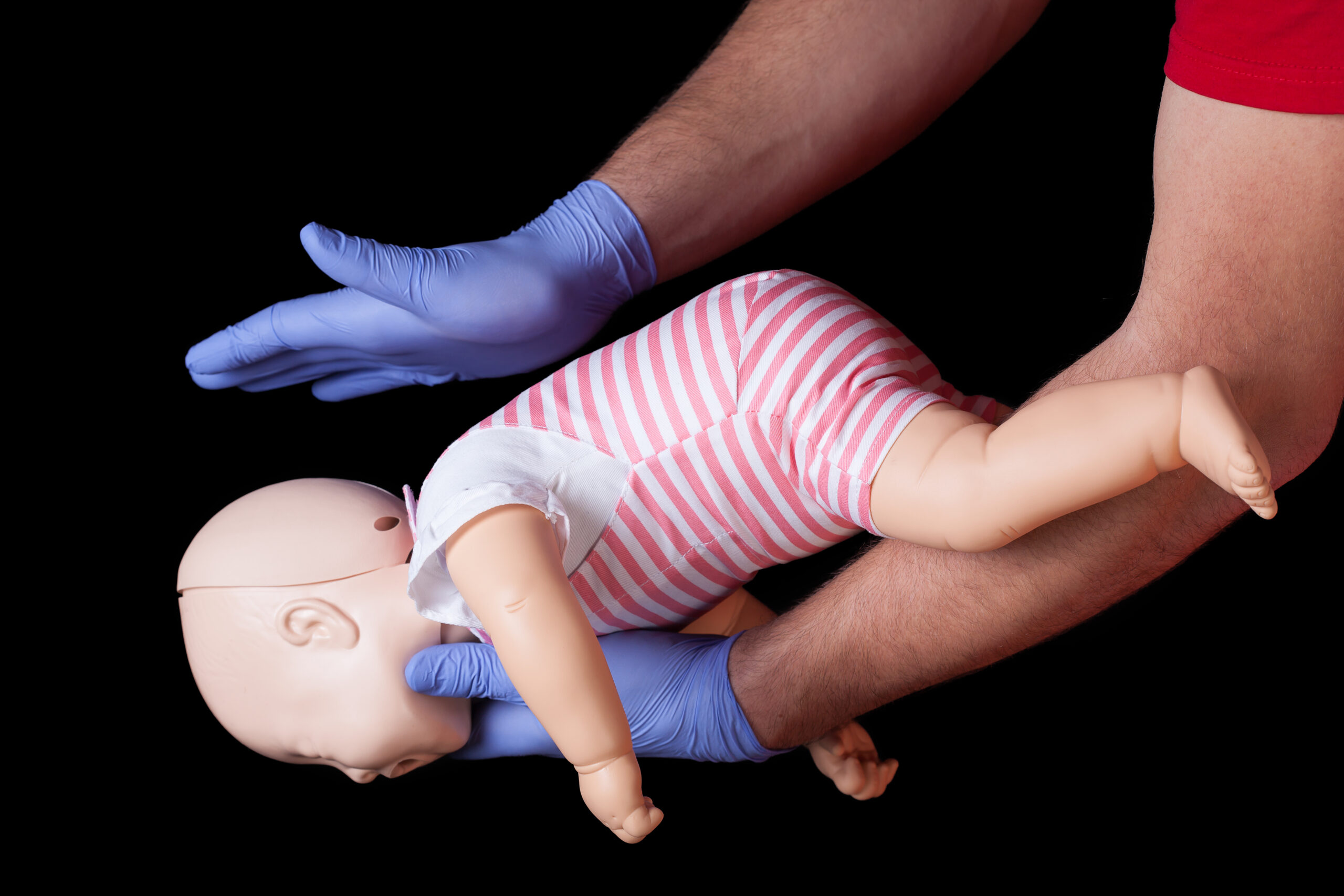
Important: First aid for a choking infant under 1 year requires a different technique and is covered in dedicated paediatric first aid training.
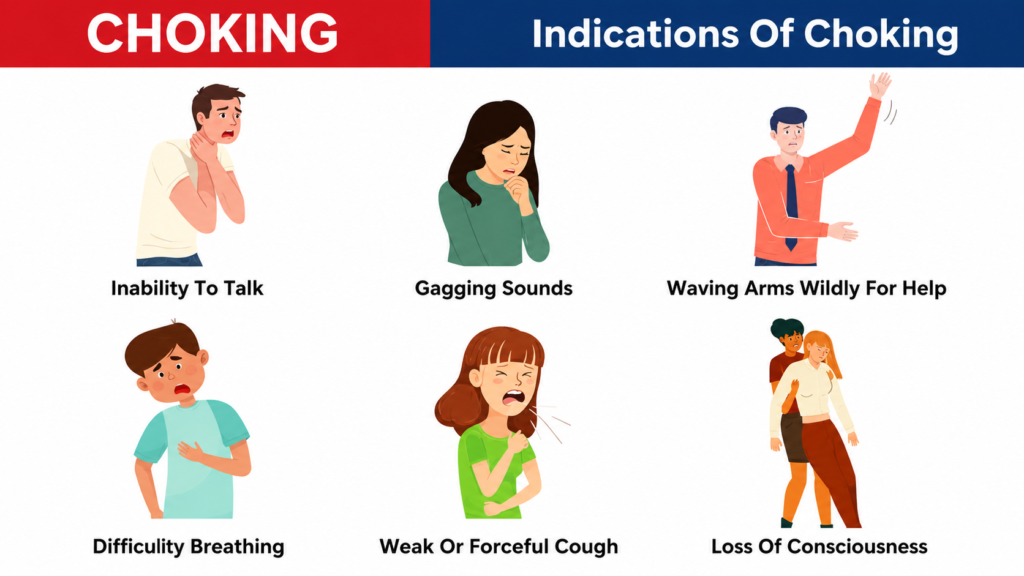
How to Recognise the Signs of Choking
Signs and Symptoms of Choking — Quick Reference Table
Sign or Symptom | What It Indicates |
Clutching the throat with one or both hands | Universal choking distress signal |
Unable to speak, or very weak voice | Significant airway obstruction |
High-pitched noise or complete silence when breathing | Partial or complete blockage |
Laboured or difficult breathing | Reduced airflow to the lungs |
Face flushing red, then turning bluish (cyanosis) | Oxygen deprivation — act immediately |
Weak, silent, or ineffective cough | Person cannot clear the obstruction independently |
Pale, limp, or unconscious | Critical — begin CPR without delay |
The 5 Choking First Aid Steps for Adults and Children Over 1 Year (Australian Guidelines)
The following sequence reflects current Australian Resuscitation Council (ARC) guidelines and applies equally to adults and children over 1 year of age. Whether you are at home in the suburbs of Adelaide or managing a workplace on the city fringe, these are the steps to follow.
THE 5 STEPS AT A GLANCE
Step | Action | Key Detail |
1 | Encourage coughing | Ask them to cough forcefully — this alone may expel the object |
2 | Call triple zero (000) | Call immediately if coughing fails or the airway stays blocked |
3 | Give up to 5 back blows | Heel of hand between the shoulder blades; head lower than chest |
4 | Give up to 5 chest thrusts | Heel of hand on the lower half of the breastbone, thrust inward |
5 | Alternate and start CPR if needed | Continue cycling through steps 3 and 4 until cleared, help arrives, or the person loses consciousness |
Step 1 — Encourage the Person to Cough as Forcefully as Possible
If the choking person is conscious and still able to cough, encourage them to do so with as much force as they can manage. A powerful cough creates significant internal pressure along the airway and may be enough to dislodge the obstruction on its own. Do your best to keep the person calm — panic worsens breathing and diminishes the effectiveness of a cough.
Do not interfere with a productive cough. If the person is coughing with real force, their airway is not fully blocked and they may clear it without further help. If the cough is weak, silent, or produces no result within a short time, move immediately to Step 2.
Step 2 — Call Triple Zero (000) Without Delay
If coughing has not cleared the blockage, or the person is unable to cough effectively, call triple zero (000) at once and request an ambulance. Describe the situation clearly and stay on the line for instructions.
If other people are nearby, direct one of them to make the call while you continue delivering first aid — do not abandon your efforts to phone for help if someone else can do it. Do not wait to see whether things improve before calling. Emergency health authorities consistently advise that early contact with 000 is one of the most critical actions a bystander can take. In Adelaide, as anywhere in Australia, getting the ambulance on its way as soon as possible matters — even if your first aid efforts succeed, the person still needs professional medical assessment.
Step 3 — Deliver Up to 5 Back Blows Between the Shoulder Blades
Position yourself to one side and slightly behind the choking person. Place one hand on their chest for support and encourage them to lean well forward so that their head is lower than their body — this allows gravity to assist in directing any dislodged object toward the mouth rather than further down the airway.
Using the heel of your hand — the firm, fleshy base of your palm — deliver up to 5 sharp, firm blows to the centre of the back, between the shoulder blades. After each blow, check whether the obstruction has been cleared. If the object dislodges after 2 blows, there is no need to continue to 5. The aim is to give up to 5 and reassess, not to complete all 5 regardless of outcome.
TECHNIQUE NOTE: Lean the person well forward before delivering back blows. Use the heel of the hand for firm, targeted force. Check the airway after every blow and stop as soon as it clears.
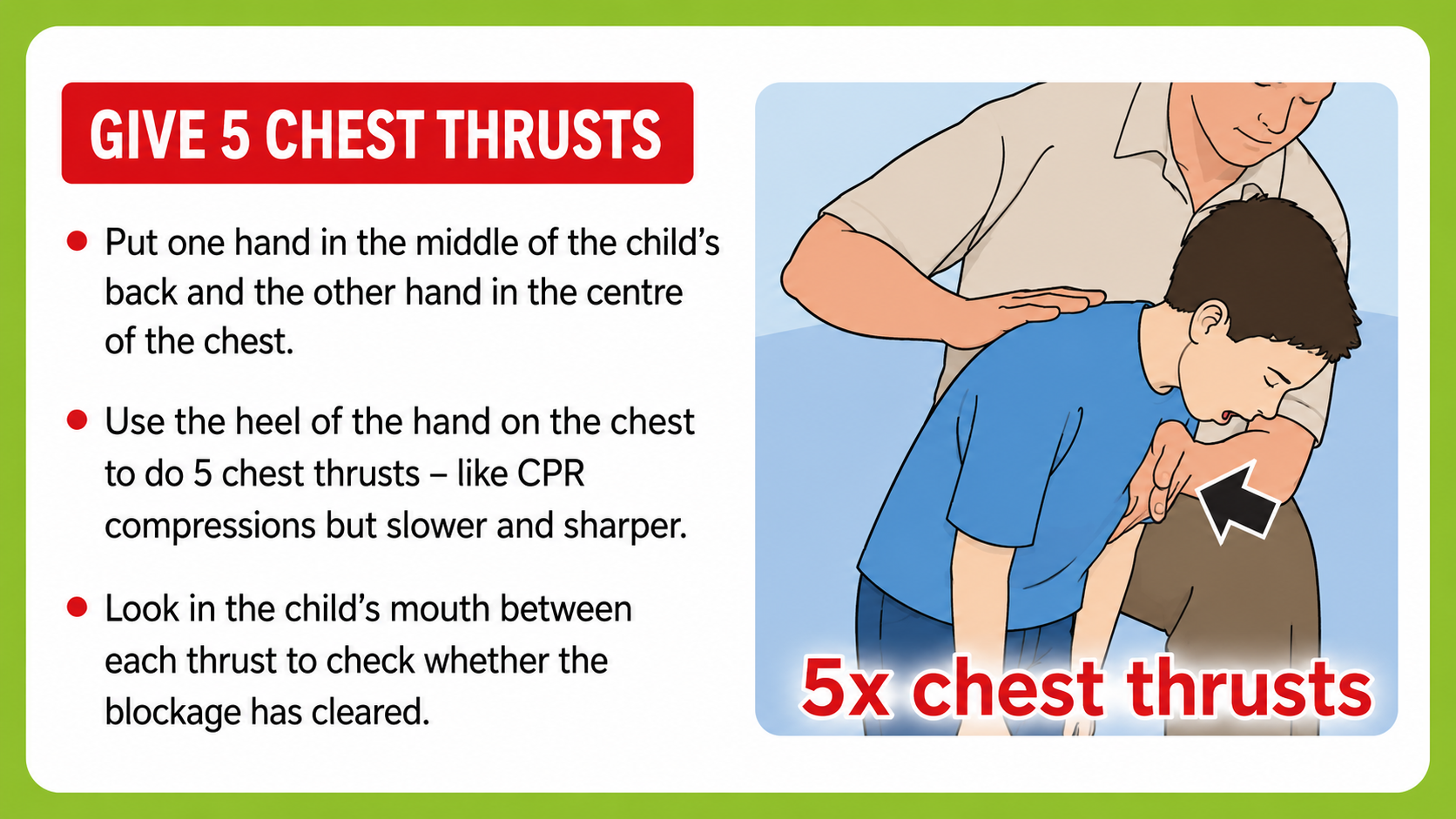
Step 4 — Deliver Up to 5 Chest Thrusts to the Lower Breastbone
If the blockage has not cleared after 5 back blows, move immediately to chest thrusts. Stand behind the person and place one hand flat against their upper back for support. Position the heel of your other hand on the lower half of the breastbone — the central point of the chest, just above where the lower ribs meet the sternum.
Thrust sharply inward with firm, controlled force. Give up to 5 chest thrusts, checking after each one to see whether the obstruction has cleared. As with back blows, stop as soon as the airway is freed — there is no need to continue to 5 if the blockage dislodges sooner.
An important note: in Australian first aid guidelines, chest thrusts are delivered inward to the lower half of the breastbone. This is different from the abdominal thrusts used in the Heimlich manoeuvre, which is not a recommended technique in Australia. For pregnant women, or for anyone where abdominal pressure would be inappropriate, chest thrusts are always the correct approach.
Step 5 — Alternate Back Blows and Chest Thrusts, Then Begin CPR if Required
If neither the back blows nor the chest thrusts have resolved the obstruction, continue alternating between them: 5 back blows — check — 5 chest thrusts — check — repeat. Maintain this cycle until the object is dislodged, the person can breathe freely, or emergency services arrive.
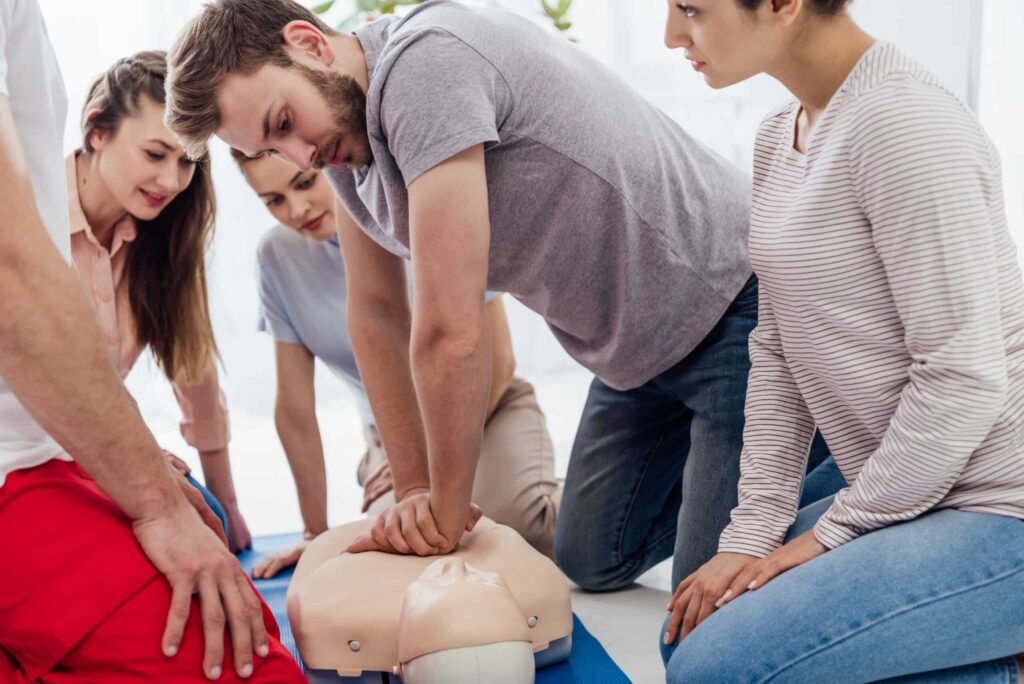
If at any point the choking person becomes blue, limp, or loses consciousness, stop the back blows and chest thrusts immediately. Lower them carefully to the ground, call 000 if you have not already done so, and start CPR at once. Begin with chest compressions — place the heel of one hand on the centre of the chest at the lower breastbone, place your other hand on top, interlock your fingers, and compress firmly at a rate of 100 to 120 compressions per minute. After every 30 compressions, check the mouth for any visible obstruction, then attempt 2 rescue breaths. Continue until the person recovers, regains responsiveness, or paramedics take over.
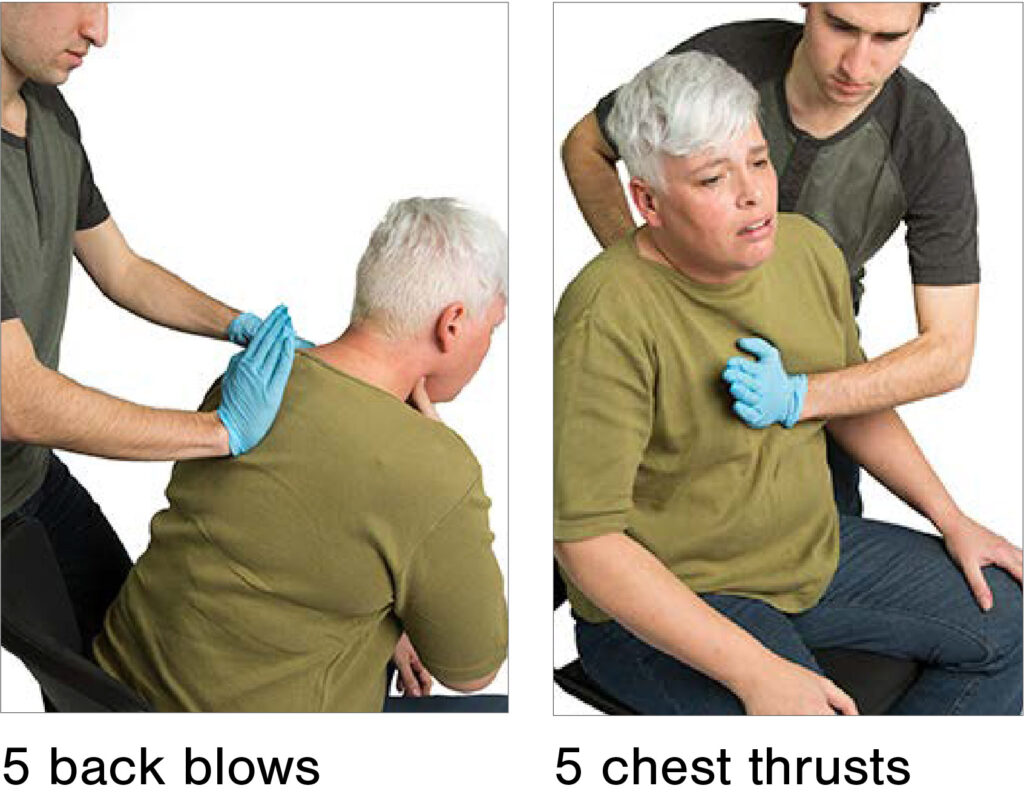
Back Blows and Chest Thrusts — Why the Heimlich Manoeuvre Is Not Used in Australia
Many people have encountered the Heimlich manoeuvre through American films and television — a technique using sharp upward thrusts to the abdomen from behind a choking person. In Australia, this technique is not part of the standard first aid response, and understanding why is important for anyone who has previously been trained in it.
What Is the Difference Between Chest Thrusts and the Heimlich Manoeuvre?
Technique | Used In | Method | Australian Guideline |
Heimlich manoeuvre (abdominal thrusts) | USA (historically) | Inward and upward thrust to the abdomen | Not recommended |
Chest thrusts | Australia, UK and others | Inward thrust to the lower half of the breastbone | Recommended |
Back blows | Australia, UK and others | Up to 5 sharp blows between the shoulder blades | Recommended — used in combination with chest thrusts |
Australian and International Guidelines on Choking First Aid
The Australian Resuscitation Council (ARC), First Aid Pro Australia, and the Royal Life Saving Society of Australia all endorse the combined use of back blows and chest thrusts as the appropriate, evidence-based response to a choking emergency in adults and children over 1 year. This approach also aligns with guidance from the International Liaison Committee on Resuscitation (ILCOR) and the United Kingdom Resuscitation Council.
The clinical rationale is clear. Back blows between the shoulder blades generate vibration and pressure along the airway that can shift a foreign object. Chest thrusts replicate the mechanics of a cough from outside the body, compressing the chest cavity and producing a burst of airflow capable of expelling an obstruction. Used together in alternating cycles, they form a reliable, safe, and well-evidenced sequence — without the internal injury risks that have been associated with abdominal thrusts.
When to Begin CPR After a Choking Emergency
Recognising When a Choking Person Has Lost Consciousness
If a choking person loses consciousness despite your first aid efforts, the situation has escalated to a combined cardiac and respiratory emergency that requires CPR. Signs to watch for include the person going limp, their face or lips turning blue from oxygen deprivation, or them collapsing. At this point, back blows and chest thrusts must stop — they are no longer appropriate and will not help.
If the person is still conscious but deteriorating — becoming increasingly distressed, weaker, or less responsive — continue alternating back blows and chest thrusts while waiting for the ambulance to arrive. Do not leave the person unattended unless it is absolutely necessary to call 000.
How to Start CPR Following a Choking Emergency
Once the choking person is unconscious and on the ground, begin CPR without delay. Before attempting rescue breaths, visually check the mouth — if you can see an object, carefully remove it. Do not perform blind finger sweeps, as this risks pushing the obstruction further into the airway.
For an adult: place the heel of one hand on the centre of the chest at the lower half of the breastbone, place your other hand on top, interlock your fingers, and deliver 30 chest compressions at a rate of 100 to 120 per minute. After 30 compressions, gently tilt the head back, lift the chin, and attempt 2 rescue breaths. If the airway is still blocked and the breaths do not go in, return immediately to compressions and re-check the mouth before each subsequent rescue breath attempt. Continue this cycle until the obstruction clears, the person recovers, or paramedics take over.
Building Confidence Through Hands-On Practice
Real confidence in first aid comes from doing, not reading. When you train with First Aid Pro in Adelaide, you practise choking response techniques on manikins, receive direct feedback from qualified instructors, and work through realistic emergency scenarios designed to prepare you for the unpredictability of a genuine crisis. That practical experience is what closes the gap between knowing what to do and actually being able to do it — quickly, calmly, and correctly — when a life is on the line.
Related Reading
- Australian Resuscitation Council (ARC). Guideline 4 — Airway. arc.org.au
- Raising Children Network Australia. Choking first aid for babies under 12 months: in pictures
- Healthdirect: Choking
- Royal Life Saving Society of Australia. First Aid Guidelines. royallifesaving.com.au
- International Liaison Committee on Resuscitation (ILCOR). Consensus on Science with Treatment Recommendations. ilcor.org
- Australian Skills Quality Authority (ASQA). Standards for Registered Training Organisations. asqa.gov.au
- Better Health Channel: Choking First Aid
Frequently Asked Questions
Can I use the Heimlich manoeuvre in Australia?
No. Abdominal thrusts are not recommended under Australian first aid guidelines. The national standard, as endorsed by the ARC, is back blows combined with chest thrusts. If you have previously trained in the Heimlich manoeuvre, refreshing your skills through an accredited Australian course is strongly advisable.
When should you call triple zero (000) during a choking emergency?
As soon as coughing has failed to clear the blockage, or the person is unable to cough effectively. If others are present, direct one person to call 000 while you continue delivering first aid.
Where are back blows delivered, and how?
Between the shoulder blades, using the heel of the hand, with the person leaning well forward so their head is lower than their chest. Give up to 5 blows and check after each one.
Where do you place your hand to deliver chest thrusts?
On the lower half of the breastbone — the centre of the chest — using the heel of one hand, thrusting sharply inward. Give up to 5 chest thrusts and check after each one.
What should you do if the choking person loses consciousness?
Lower them to the ground, call 000 if not already done, and begin CPR immediately — starting with 30 chest compressions. Check the mouth for any visible object before each attempt at rescue breathing.