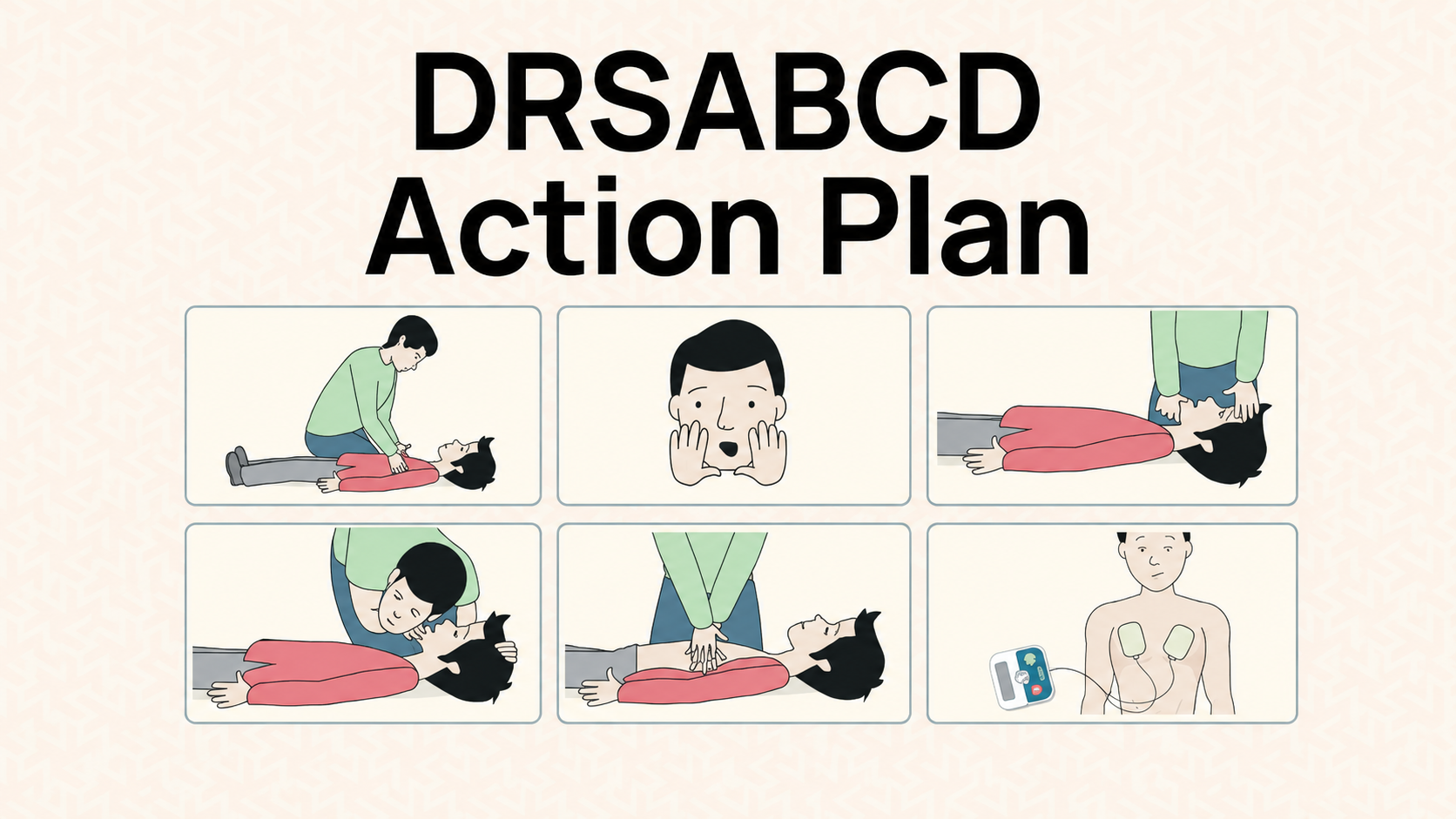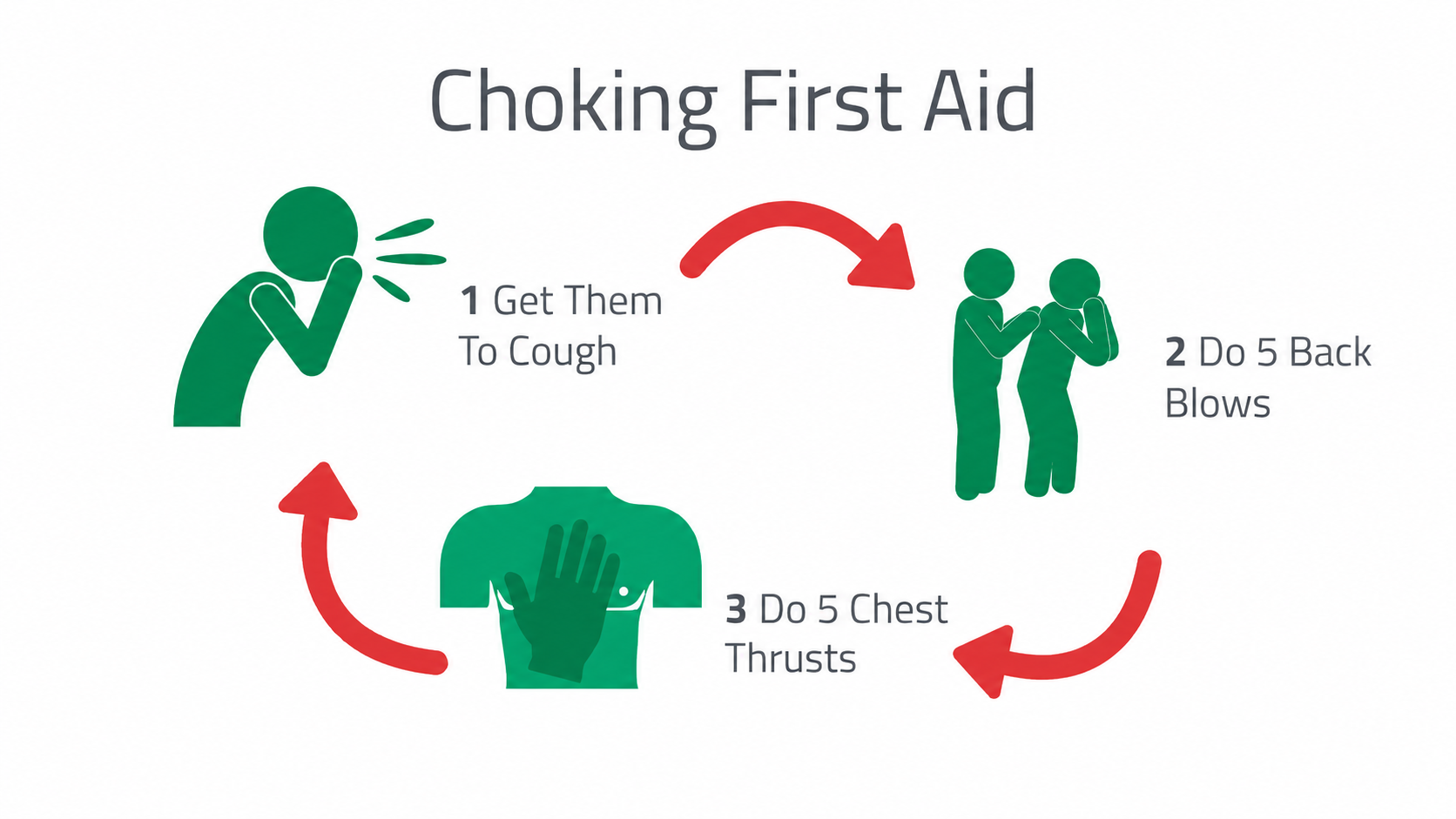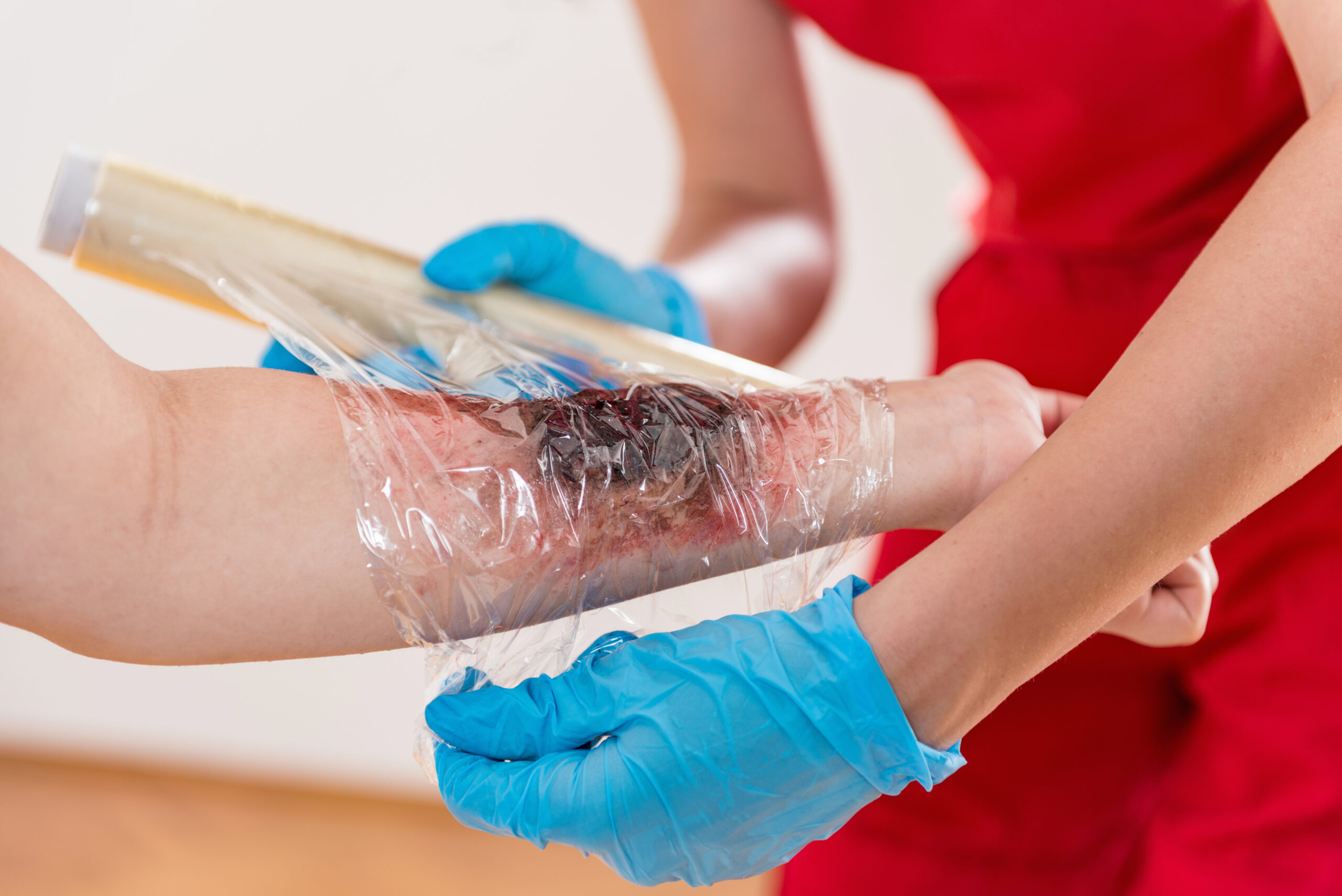
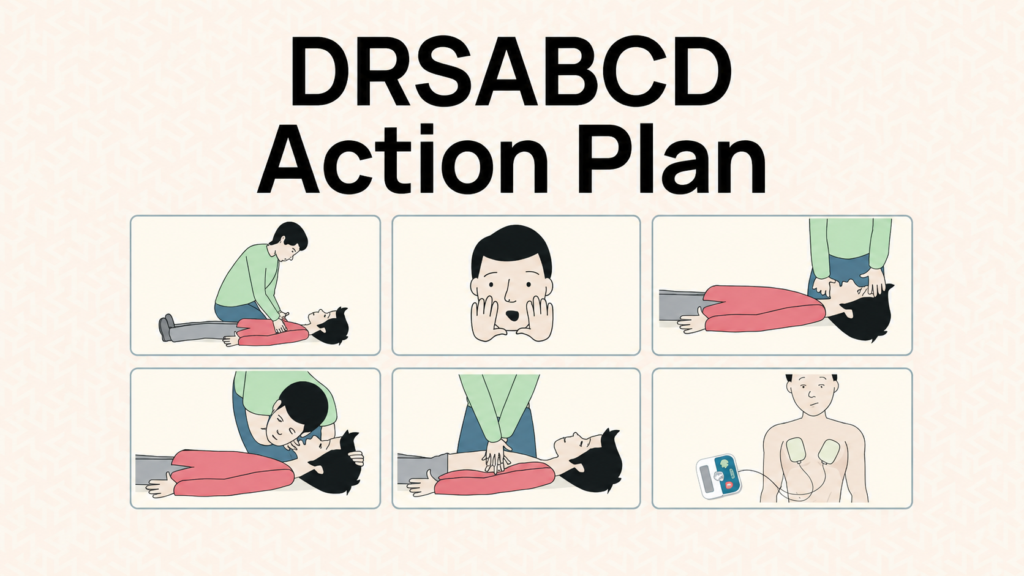
DRSABCD is a fundamental first aid action plan that stands for Danger, Response, Send for help, Airway, Breathing, CPR, and Defibrillation. It provides a clear, step-by-step framework for responding to medical emergencies — from busy Adelaide CBD workplaces to suburban homes in Glenelg, Norwood, or the Adelaide Hills. This widely recognised first aid acronym acts as a memory guide, ensuring responders follow the correct sequence when every second counts.
According to the Australian Resuscitation Council, more than 30,000 Australians suffer a cardiac arrest outside of hospital each year, with fewer than 10% surviving to hospital discharge. Prompt and correct application of the DRSABCD action plan, however, has the potential to increase survival rates by as much as 40%.
Want to learn these skills the right way? Enrol in a nationally recognised first aid course or CPR training with First Aid Pro Adelaide and gain the confidence to act decisively in any emergency.
Key Takeaways
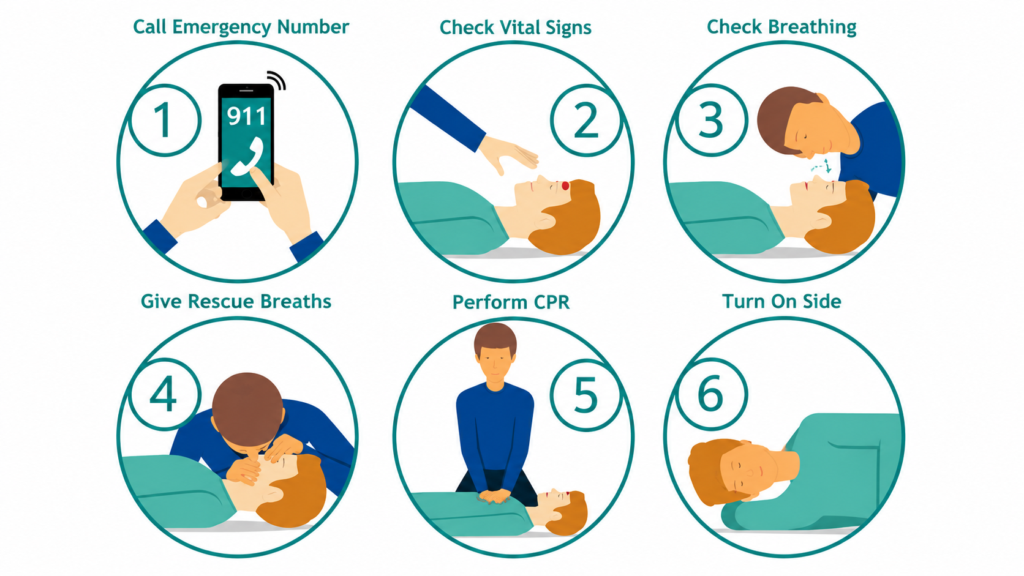
- The DRSABCD action plan is one of the most important frameworks any person in Adelaide — or anywhere in Australia — can learn. Here is the sequence to remember:
- D — Check for Danger to yourself, bystanders, and the casualty before doing anything else. R — Assess for Response by speaking to and touching the casualty. S — Send for Help by calling 000 as soon as possible. A — Open and clear the Airway. B — Check for normal Breathing for at least 10 seconds. C — If not breathing normally, begin CPR with 30 chest compressions followed by 2 rescue breaths. D — Apply a Defibrillator (AED) as soon as one is available and follow its instructions.
- Practical, accredited first aid training is the key to applying these steps with speed and confidence in a real emergency. Regular refresher training helps maintain those critical skills over time.
Breaking Down the DRSABCD Acronym in First Aid
The DRSABCD acronym forms the backbone of first aid training in Australia, providing a systematic method for emergency response. Each letter represents an essential action:
DRSABCD Action Plan
| Letter | Stands For | Action Required |
|---|---|---|
| D | Danger | Check for hazards affecting yourself, bystanders, and the casualty. |
| R | Response | Determine whether the person is conscious and responsive. |
| S | Send for Help | Contact 000 for emergency services immediately. |
| A | Airway | Open and clear the casualty's airway. |
| B | Breathing | Look, listen, and feel for normal breathing. |
| C | CPR | Begin cardiopulmonary resuscitation if required. |
| D | Defibrillation | Use an Automated External Defibrillator (AED) if one is available. |
The protocol has developed significantly over the years — starting out as the simple “ABC” model (Airway, Breathing, Circulation), before evolving into “DRABC” and eventually the current DRSABCD action plan, which is now endorsed by the Australian Resuscitation Council and taught in first aid training courses throughout South Australia and the rest of the country.

A Step-by-Step Guide to the DRSABCD First Aid Action Plan
Step 1: Danger — Assess the Scene Before You Act
Before approaching any casualty, take a moment to scan the environment for potential hazards. In an Adelaide context, this might mean assessing risks at a worksite in Osborne, a busy road in the Tea Tree Gully area, or a public event at Adelaide Oval.
Common dangers include:
- Moving traffic
- Fire or smoke
- Electrical hazards
- Toxic or chemical substances
- Unstable structures or surfaces
- Aggressive or distressed bystanders
Step 2: Response — Check If the Person Is Conscious
Once it is safe to approach, assess the casualty's level of responsiveness.
- Introduce yourself and ask for their consent to assist
- Speak loudly and clearly: “Can you hear me?” and “What is your name?”
- Gently squeeze both shoulders
- If there is no response, treat the person as unconscious
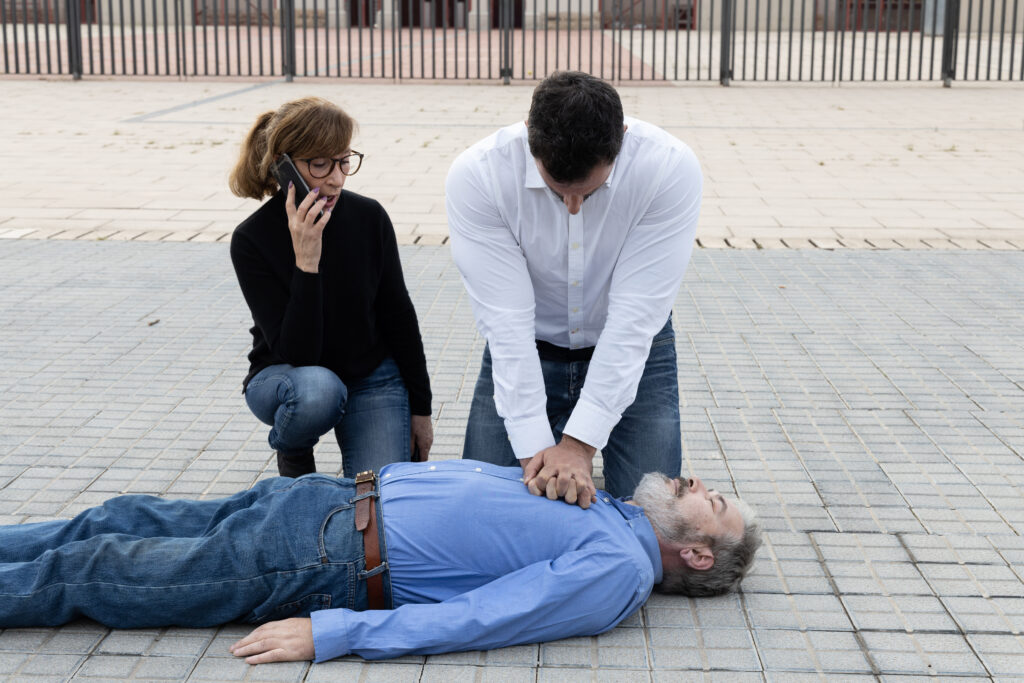
Step 3: Send for Help — Call 000 Without Delay
If the person is unresponsive, call for emergency help immediately.
- Call 000 immediately, or dial 112 from a mobile in areas with limited coverage
- Clearly state your location, especially in more remote parts of South Australia
- Describe the nature of the emergency
- Answer all questions from the operator calmly
- Follow any instructions given
- Do not end the call until told to do so
Step 4: Airway — Open and Clear the Airway
For an unconscious casualty:
- Lay the person on their back on a flat surface
- Tilt the head back gently and lift the chin to open the airway
- Look inside the mouth for any visible obstructions
- If an obstruction is present, roll the person into the recovery position and carefully remove it
- Return them to their back once the airway is clear
Step 5: Breathing — Look, Listen, and Feel
Check carefully for signs of normal breathing.
- Watch for visible chest rise and fall
- Listen for breath sounds
- Feel for air movement against your cheek
- Spend at least 10 seconds completing this assessment
Step 6: CPR — Begin Cardiopulmonary Resuscitation
If the person is not breathing normally:
- Kneel beside the casualty at chest level
- Place the heel of one hand in the centre of the chest with the other hand on top
- Keep your arms straight and shoulders directly above your hands
- Compress the chest to around one-third of its depth, approximately 5–6 cm for adults
- Perform 30 compressions at a rate of 100–120 per minute
- Allow full chest recoil between compressions
- Deliver 2 rescue breaths by tilting the head back, pinching the nose, and breathing until the chest rises
- Continue the 30:2 cycle until help arrives or the person begins breathing normally
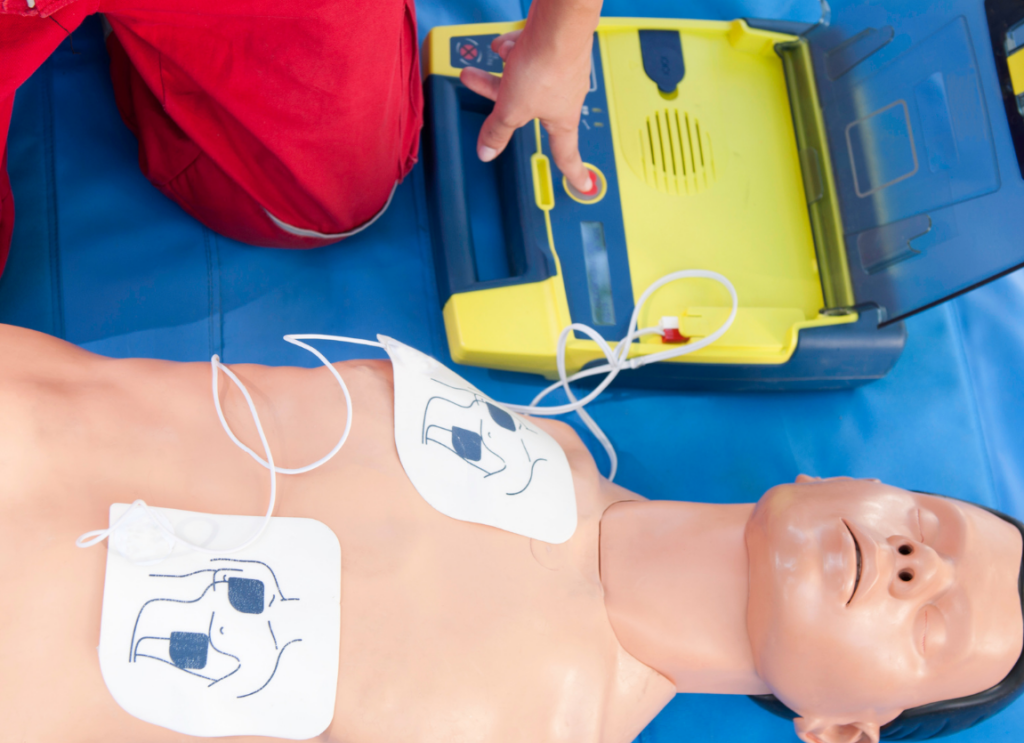
Step 7: Defibrillation — Use an AED as Soon as Possible
If an Automated External Defibrillator is available — and they are increasingly common in shopping centres, sports facilities, and public buildings across Adelaide — use it as soon as possible.
- Switch the AED on and follow the voice prompts
- Remove or cut away clothing to expose the chest
- Attach the electrode pads exactly as shown in the diagram
- Ensure nobody is in contact with the casualty while the AED analyses the heart rhythm or delivers a shock
- Resume CPR between shocks as directed by the device
Hands-on practice is essential to carry out these steps with confidence under pressure. First Aid Pro Adelaide offers comprehensive, nationally recognised training that prepares you to perform every stage of the DRSABCD action plan effectively.

Applying DRSABCD in Real-World Emergency Situations
Knowledge of the DRSABCD steps is only the beginning. Applying them calmly and correctly under pressure is a skill developed through practice. Here are some practical considerations:
Staying Calm Under Pressure
- Take a slow breath before you approach the scene
- Speak clearly and deliberately to bystanders and the casualty
- Focus on completing one step at a time
- Trust your training and follow the sequence
Scenario-Specific Considerations
Scenario | Key Considerations |
Adelaide workplaces | Know where your first aid kit, AED, and emergency exits are located |
Public spaces (e.g. Rundle Mall, Adelaide Central Market) | Assign bystanders specific roles — one to call 000, one to locate an AED |
Home | Make sure family members know where first aid supplies are kept |
Remote or rural SA | Have a communication plan in place and know your exact GPS location |
Water incidents (beaches, pools) | Remove the person from the water before starting CPR |
Common Errors to Avoid
Even small mistakes during an emergency response can delay treatment and reduce the casualty’s chance of recovery. Avoid these common first aid errors:
- Rushing toward a casualty without first checking for danger
- Delaying the call to emergency services
- Performing chest compressions too slowly or too shallowly
- Pausing compressions for longer than necessary
- Hesitating to use an AED when one is available
- Stopping CPR before professional help takes over
Certified first aid training helps eliminate these errors and gives you the confidence to act quickly and correctly when it matters most.
Common AED Myths Debunked
Myth | Fact |
AEDs are complicated to use | Modern AEDs provide clear voice instructions throughout |
Using an AED can harm the patient | AEDs only deliver a shock when the heart rhythm requires it |
Rescuers can be electrocuted | When used correctly, AEDs pose no risk to the rescuer |
Special certification is required | AEDs are specifically designed for use by the general public |
AEDs should not be used on pregnant women | AEDs can and should be used on pregnant women in cardiac arrest |

DRSABCD and Workplace First Aid Requirements in South Australia
South Australian workplaces are required to maintain appropriate first aid capabilities, and a solid understanding of the DRSABCD action plan is central to the responsibilities of any workplace first aid officer.
Workplace Health and Safety Obligations
Under South Australia’s Work Health and Safety Regulations, employers (PCBUs) must assess workplace risks to determine first aid needs.
- Provide adequate first aid equipment suitable for the workplace’s hazards, size, and workforce.
- Ensure first aid facilities and kits are accessible to all workers, located near high-risk areas.
- Appoint a sufficient number of trained first aiders based on risk assessment
The specific requirements will vary depending on the size, industry, and risk profile of the workplace — whether that is a construction site in Elizabeth, a restaurant on Hindley Street, or a warehouse in Beverley.
The Business Case for Workplace First Aid Training
Investing in first aid training for your Adelaide workforce delivers measurable benefits:
- Reduces the severity of injuries through faster initial treatment
- Minimises disruption to operations following workplace incidents
- Builds confidence among staff to respond appropriately in emergencies
- Can lower workers’ compensation costs over time
- Creates a demonstrably safer working environment
- Reflects a genuine commitment to employee wellbeing
- Helps meet legal obligations under WHS legislation
- And most importantly — it saves lives
First Aid Kits and Supplies
According to Safe Work Australia, workplace first aid kits are recommended to:
- Be readily accessible to all workers
- Be appropriate for the hazards present in that specific workplace
- Be regularly inspected and restocked
- Contain only items that first aiders are trained to use
- Include supplies suited to Australian conditions
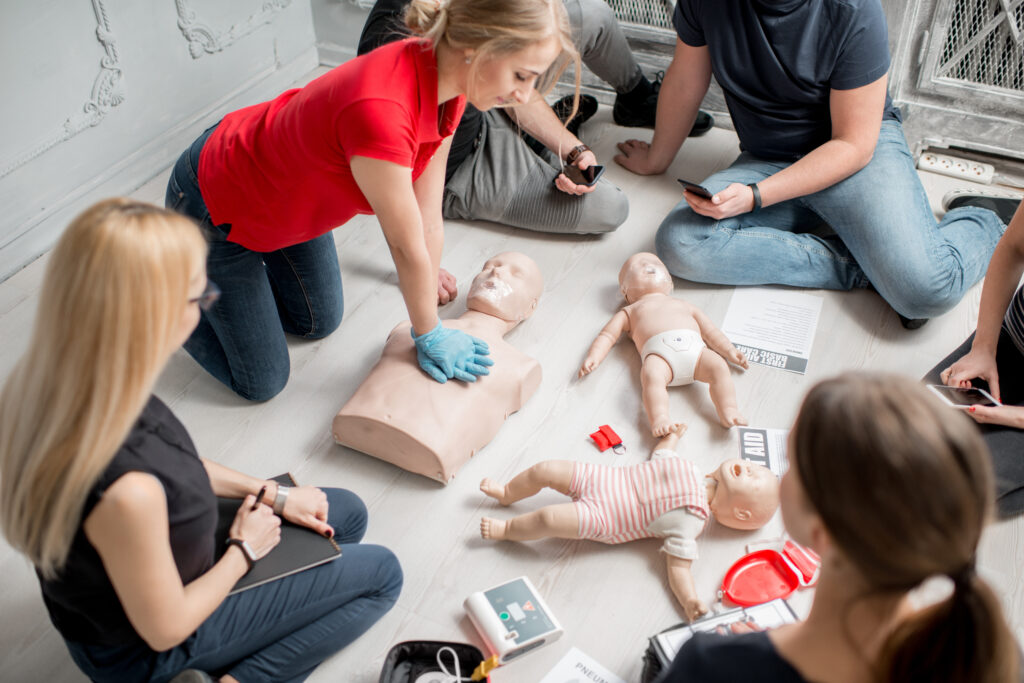
Required Qualifications for Workplace First Aid Officers
The minimum recommended qualification for a workplace first aid officer in South Australia is HLTAID011 Provide First Aid (which incorporates HLTAID009 Provide Cardiopulmonary Resuscitation). This nationally recognised certification:
- Covers the full DRSABCD action plan in depth
- Teaches management of common workplace medical emergencies
- Includes a practical skills assessment
- Remains valid for three years
- Requires the CPR component to be refreshed annually
Ready to get properly trained in DRSABCD and other essential first aid skills? Enrol with First Aid Pro Adelaide today and gain nationally recognised certification, practical confidence, and the ability to help save a life.
Summing Up DRSABCD
The DRSABCD action plan provides a proven, systematic approach to emergency first aid that every person in Adelaide should be familiar with. By methodically working through each stage — checking for Danger, assessing Response, Sending for help, managing the Airway, checking for Breathing, performing CPR when needed, and applying Defibrillation at the earliest opportunity — first aid responders can meaningfully improve outcomes for casualties before professional help arrives.
Understanding the acronym is an important first step, but practical training is what builds the muscle memory and composure needed to perform these actions under pressure. In many emergencies, the actions taken in the first few minutes make the difference between life and death.
Do not wait for an emergency to find out whether you are prepared. Enrol in a nationally recognised first aid course with First Aid Pro Adelaide today, and be ready to save a life tomorrow.
Related Reading
- Australian Resuscitation Council. (2023). ANZCOR Guideline 8 — Cardiopulmonary Resuscitation.
- Better Health Channel, Victoria State Government. (2024). First Aid Basics and DRSABCD.
First Aid Pro. (2024). What Does DRSABCD Stand For? https://www.firstaidpro.com.au/blog/what-does-drsabcd-stand-for/
- Safe Work Australia. (2023). First Aid in the Workplace Code of Practice.
Safe Work SA: First Aid
Frequently Asked Questions
What does DRSABCD stand for in first aid?
DRSABCD stands for Danger, Response, Send for help, Airway, Breathing, CPR, and Defibrillation. It is the standard first aid action plan taught throughout Australia to help responders manage emergencies safely and systematically.
When should I call 000 during the DRSABCD process?
You should call 000 as soon as you determine the casualty is unresponsive or the situation is serious. Early emergency assistance is critical during cardiac arrest and other life-threatening incidents.
What should I do if the person is not breathing normally?
If the casualty is not breathing normally, begin CPR immediately using 30 chest compressions followed by 2 rescue breaths, and continue until help arrives – include the use of an AED if available.
Can an untrained person use an AED in Australia?
Yes. Automated External Defibrillators (AEDs) are designed for public use and provide clear voice instructions to guide users through the process safely.
How often should CPR training be refreshed in Australia?
The Australian Resuscitation Council recommends refreshing CPR skills every 12 months to help maintain confidence and practical ability during emergencies.